High-Yield Citrus: Managing Lemons and Oranges in Backyards
A technical manual for utilizing nutrient-dense soil and strategic pruning to maximize evergreen productivity.
Citrus trees represent a unique class of perennial: the evergreen fruiting machine. Their year-long activity requires a different management philosophy than seasonal crops. This guide provides the systems-level approach needed to turn a backyard tree into a consistent, high-volume producer of vitamin-rich fruit.
1. Introduction: The Evergreen Powerhouse
In the Evergreen Hideout, citrus trees—particularly lemons, oranges, and naartjies—form the backbone of our perennial food system. Unlike deciduous fruit trees, citrus remain evergreen, maintaining an active metabolism throughout the year. This continuous growth cycle means they never truly “rest” and therefore demand consistent, technically sound stewardship to avoid nutrient depletion and physiological stress. A lapse in care during a dry winter or a hot summer can set back production for an entire season or more.
In the Soshanguve climate, citrus management revolves around two dominant constraints:
- Extreme summer heat: Accelerates transpiration (water loss through leaves) and increases nutrient demand as the tree works harder to cool itself and size fruit.
- Dry winter periods: Suppress biological activity in the soil, slowing down nutrient mineralization just when the tree is often setting its most important bloom (winter/spring flowers for summer fruit).
When these factors are properly managed, a single mature citrus tree can produce hundreds of fruits per season, delivering a trifecta of value:
- Nutritional Security: Reliable vitamin C production, crucial for immune health.
- Medicinal Utility: Medicinal peels (rich in d-limonene) and essential oils for home remedies and cleaning.
- Space Efficiency: Year-round food security from a compact footprint, often in spaces too small for larger orchard trees.
By treating citrus as high-performance biological machines rather than ornamental plants, we can engineer backyard orchards that are resilient, productive, and long-lived. The goal is a tree that is not just alive, but optimally *productive*.
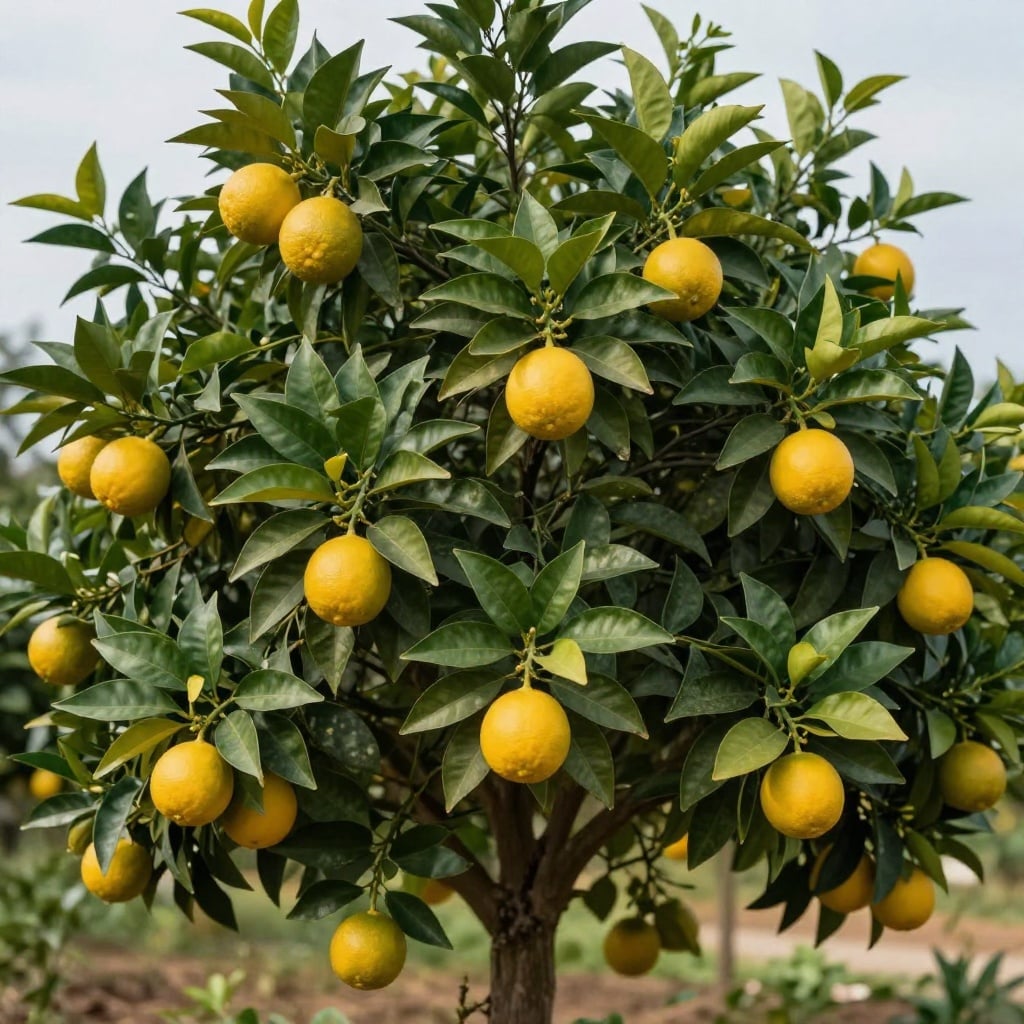
Biological efficiency: citrus trees require consistent nutrient availability to sustain vigorous foliage growth and fruit development at the same time.
Citrus are heavy feeders with shallow, wide-spreading root systems. Unlike deep-rooted trees, 80% of their feeder roots lie in the top 30-60 cm of soil. They perform best when paired with long-term fertility infrastructure such as engineering deep fertility with the trench method. Nearby trenches act as underground reservoirs that store:
- Moisture: During extended dry spells, water wicks laterally into the citrus root zone.
- Slow-release organic matter: As the trench contents decompose, they release a steady stream of nutrients.
- Microbial life: Supports nutrient cycling and protects roots from pathogens through competitive exclusion.
We reinforce this system with surface protection using grass mulch. This “Soil Armor” shields those critical shallow feeder roots from scorching heat, suppresses evaporation by up to 70%, and stabilizes the microbial populations that feed the tree. Together, trench fertility and mulch transform citrus management from a high-effort chore of constant feeding and watering into a biologically self-regulating system.
2. Why This Topic Matters: Pest Vectors and Nutrient Signals
The most serious long-term threat to citrus productivity is Citrus Psylla and the resulting Greening Disease (Huanglongbing). Once established, this bacteria-like pathogen disrupts phloem flow within the tree, blocking nutrient transport and causing fruit to remain green, bitter, and misshapen. The disease is fatal and has no cure. Prevention through tree health is therefore the primary technical objective.
Healthy citrus trees naturally resist pest pressure because they operate from a position of strength:
- Balanced Nutrition: Reduces stress-related chemical signals (like excess ethylene) that attract pests.
- Strong Sap Flow: Creates hydraulic pressure that makes it harder for sap-sucking insects like aphids and psyllids to feed and establishes themselves.
- Dense Leaf Tissue: Well-nourished leaves have thicker cell walls, making them less palatable and more difficult for pests to penetrate.
This strategy aligns directly with the organic pest master manual. Stressed trees emit specific infrared and volatile organic compounds that pests are biologically tuned to detect—they are literally broadcasting an invitation. By eliminating water and nitrogen stress through consistent irrigation and balanced feeding, we remove the invitation before pests arrive.
Citrus are also exceptionally sensitive to soil pH, which governs the uptake of micronutrients such as zinc, iron, and manganese. They prefer a slightly acidic to neutral pH (6.0-7.0). In Soshanguve's often alkaline clay soils, we must correct imbalances carefully using:
- Agricultural Lime (Calcium Carbonate): Used cautiously to raise calcium availability without drastically raising pH. Gypsum (Calcium Sulfate) is often a better choice as it adds calcium without affecting pH.
- Wood Ash: A light application supplies potassium and can gently raise pH if needed.
- Elemental Sulfur or Acidic Mulches (like pine needles): To lower pH if chlorosis (yellowing with green veins, indicating iron deficiency) appears.
Leaf color becomes the primary diagnostic tool. Deep, waxy green leaves indicate optimal nutrient flow, while yellowing (chlorosis), especially between the veins, signals a breakdown in absorption, often due to pH lockout. A healthy, dark green canopy functions as the solar engine that powers fruit production, making leaf health a non-negotiable performance metric you must monitor monthly.
3. The Technical Protocol for Pruning and Watering
Citrus pruning is not about creating a perfect shape; it is a functional intervention for plant health. The objective is maximizing airflow and light penetration into the interior canopy. We employ a modified Open Center or Vase method, systematically removing interior branches that block sunlight and trap humidity.
This approach delivers three key benefits:
- Even Fruiting: Sunlight reaches inner branches, encouraging fruit production throughout the canopy, not just on the outer "shell."
- Disease Suppression: Reduced fungal pressure from stagnant air, preventing issues like sooty mold and anthracnose.
- Management Access: Improved spray coverage and visual inspection access for early pest detection.
The Pruning Rule: "Skirt, Thin, and Height-Limit"
- Skirting: Remove all branches within 40-60 cm of the ground to prevent soil splash onto leaves (which spreads disease) and to break the "ant highway" (ants farm aphids and scale).
- Thinning: Remove inward-growing, crossing, or parallel branches that rub. Aim to create space between remaining branches.
- Height-Limiting: Citrus can be kept at a manageable height (2-3 meters) by cutting back overly vigorous upright shoots (watersprouts) to an outward-facing lateral branch.
All pruning tools must be razor-sharp and sanitized between cuts, especially when removing diseased wood. Clean cuts heal faster, reduce bark tearing, and prevent the introduction of pathogens that cause canker or dieback. Prune in late winter or early spring, after the threat of frost but before the major spring flush.
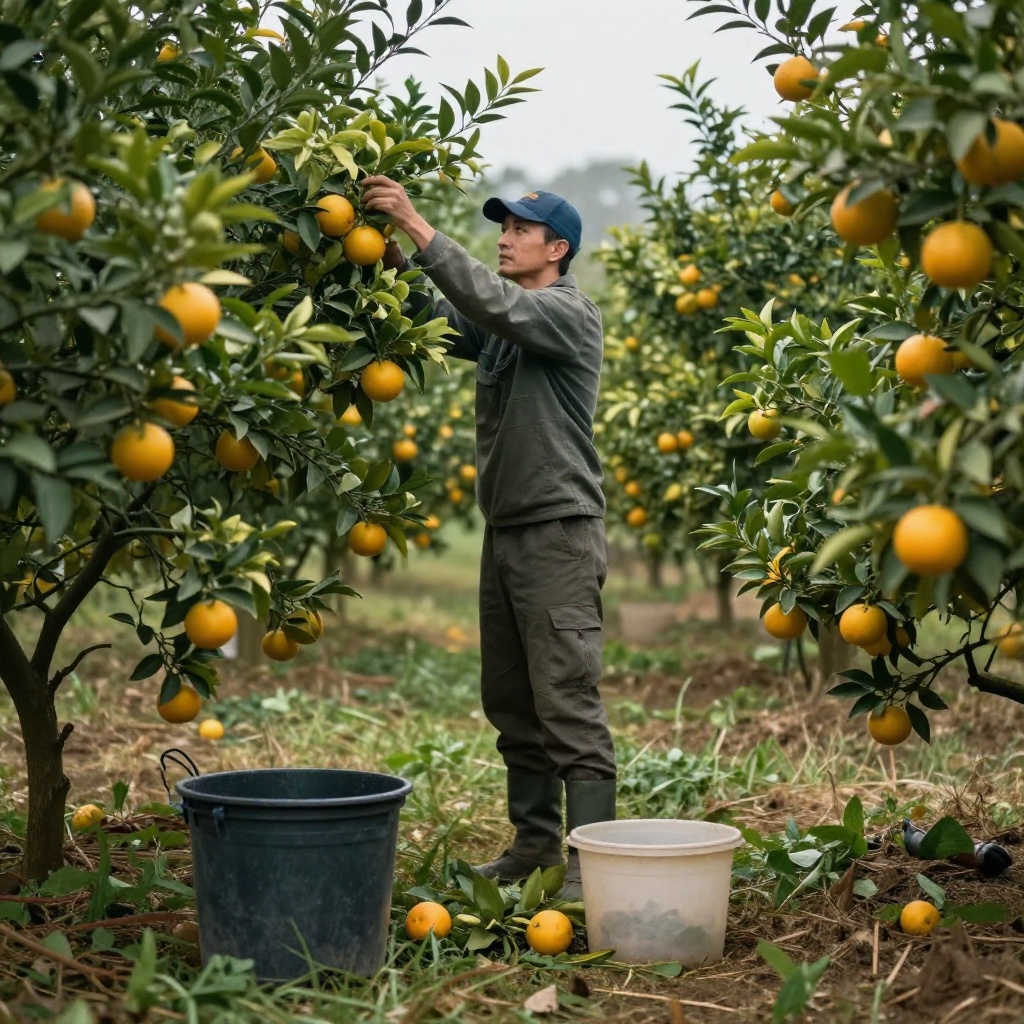
Orchard hygiene: lifting lower branches reduces ant access for aphid farming and improves airflow around the trunk and canopy base.
Irrigation strategy is equally precise and non-negotiable. Citrus respond best to deep, infrequent watering that mimics natural rainfall cycles, encouraging deep root development. We recommend adapting deep root bottle irrigation and placing multiple bottles at the drip line (the outer edge of the canopy).
This method provides several critical advantages:
- Root Training: Encourages outward and downward root growth, creating a stable, drought-resilient anchor.
- Drought Resilience: Deep roots access subsurface moisture during dry spells.
- Disease Prevention: Prevents shallow, heat-sensitive root systems and keeps the root crown dry, reducing rot risk.
Critical Irrigation Timing: During flowering and fruit set (often in late winter/spring in Gauteng), consistent moisture becomes critical. Any significant water stress during this 6-8 week phase triggers a hormonal fruit drop as a survival response—you can lose the entire crop. We also prioritize purified water sources like harvested rainwater to avoid salt and chloride accumulation from municipal water, which leads to leaf tip burn, reduced yields, and long-term soil degradation.
4. Seasonal Fertility and Micronutrient Support
Citrus follow predictable, heavy nutrient demand cycles tied to their phenology (growth stages).
- Early Spring (Post-Harvest/Pre-Bloom): Nitrogen is king to fuel the vegetative flush that will carry the next season's fruit.
- Summer (Fruit Sizing): Potassium demand skyrockets to support fruit sizing, sugar accumulation, and water regulation within the fruit.
- Autumn (Maturation): Phosphorus and micronutrients like boron and zinc are critical for fruit maturation, rind development, and flower bud initiation for next year.
We meet these demands using the complete nutrition of “Liquid Gold” from your DIY worm farm. Worm tea provides:
- Immediately Available Nitrogen: In a gentle, non-burning form.
- Beneficial Microbial Populations: These microbes colonize the root zone, acting as an extension of the tree's digestive system.
- Trace Micronutrients: Often missing from synthetic feeds, these are chelated (naturally bound) by humic acids in the castings, making them highly bioavailable.
Applied as a foliar spray (strained and diluted), worm tea also creates a beneficial microbial shield on leaf surfaces, crowding out pathogenic fungi and making the leaf surface less hospitable for aphid and psylla feeding. This integrated fertility model produces fruit with superior quality markers:
- High Brix (Sugar Content): From balanced potassium and full photosynthesis.
- Clean, Blemish-Free Skins: From strong cell walls and good calcium mobility.
- Extended Shelf Life: Dense, nutrient-rich fruit stores better.
To maintain long-term soil stability and prevent nutrient mining, we incorporate finished compost or well-rotted manure in a broad ring around the drip line twice yearly (early spring and late autumn). This sustains the soil’s humus reservoir—the long-term nutrient bank. Combined with structural pruning and precision irrigation, this holistic system allows citrus trees to remain highly productive for decades without entering a decline phase.
5. Summary and Your Next Move
High-yield citrus management is a discipline built on observation, timing, and biological respect. It's about working with the tree's evergreen nature, not against it. By mastering the interconnected practices of:
- Vase-style pruning for light and air,
- Drip-line deep irrigation for drought-proof roots,
- Seasonal nutrient cycling with biological inputs,
you create an evergreen system that thrives in the Soshanguve climate and rewards you with abundance. At the Evergreen Hideout, citrus trees are not just fruit producers—they are long-term assets that provide food, medicine, shade, and beauty, forming a living cornerstone of the homestead.
Your Citrus Season Checklist:
- ✅ Inspect leaves monthly for color (deep green goal) and signs of pests.
- ✅ Prune annually in late winter: skirt, thin, and open the center.
- ✅ Maintain deep mulch ring (keep away from trunk).
- ✅ Water deeply and infrequently, especially during bloom/fruit set.
- ✅ Apply worm tea as soil drench and foliar spray every 4-6 weeks during growing season.
- ✅ Top-dress with compost twice a year.
- ✅ Harvest fruit with clippers (don't pull) to avoid damaging the stem.
Are your lemons starting to turn yellow or looking sparse? Whether you’re diagnosing nutrient issues, managing ant-farmed aphids, or experimenting with foliar worm tea, share your experiences and questions in the comments below. What citrus variety has performed best in your garden? Together, we’ll keep building backyard orchards that feed families for generations.