The Organic Pest Master Manual: Protecting Your Harvest Without Chemicals
A technical guide to identifying, managing, and eliminating garden pests using nature’s own defense systems.
1. Introduction: The Guardian of the Hideout
In the world of organic gardening, pests are not just an annoyance; they are a signal from nature that something in your ecosystem is out of balance. When I first started the Evergreen Hideout, I saw every bug as an enemy that needed to be destroyed immediately. I quickly learned that spraying broad-spectrum poisons was a mistake; it kills everything, including the ladybugs and predatory wasps that are essential for a healthy garden. The goal of this manual is to shift your perspective from that of a soldier at war to that of an ecosystem manager. By working with soil biology rather than against it, you can create a garden that regulates itself.
Before diving into specific pests, internalize these foundational laws that govern the Hideout's approach:
- The Law of Tolerance: A pest-free garden is an ecological desert. Aim for a balanced, low-level presence that sustains your beneficial predators.
- The Law of Prevention: 90% of pest management happens before a pest appears, through soil health, plant selection, and habitat creation.
- The Law of Identification: Correctly identify the pest and its life stage. Targeting adults when eggs are the problem is wasted effort.
- The Law of Least Disruption: Always choose the method that causes the least collateral damage to the broader ecosystem. Start with physical, then biological, then botanical.
- The Law of Observation: Spend 10 minutes daily walking your garden. Early detection is the difference between a minor issue and a catastrophe.
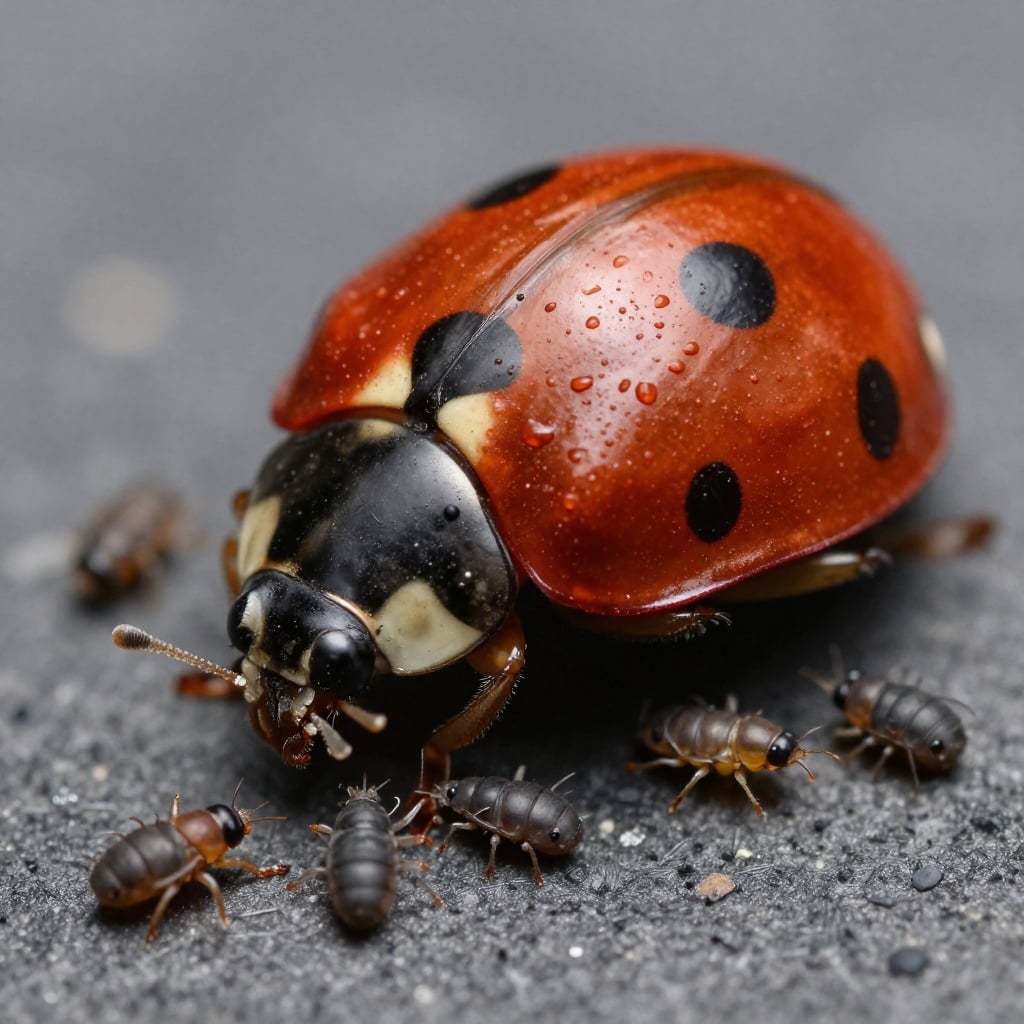
Beneficial Insects: Your first line of defense is a thriving population of predators.
This transition begins with the soil. Because pests are attracted to weak or stressed plants, a foundation of deep fertility is non-negotiable. We achieve this by engineering deep fertility with the trench method. Furthermore, the biological complexity of the underground network supports this structure. Healthy soil filled with mycorrhizal fungi makes plants naturally resistant to sap-sucking insects. When your soil is alive, the ecosystem itself begins to police your plants, making the gardener's job significantly easier.
Pests are bio-indicators. Their presence tells a specific story about your plant's health, which is a direct reflection of your soil.
- Aphids & Whiteflies: Indicate soft, rapid growth from excess nitrogen and/or drought stress. They target plants with imbalanced sap chemistry.
- Chewing Insects (Caterpillars, Beetles): Often target plants already weakened by other factors. A truly healthy plant can outgrow moderate chewing damage.
- Mites & Thrips: Signal a dry, dusty environment and often appear on plants under water or heat stress.
By fixing the soil condition (balanced fertility, consistent moisture via the trench method), you fix the plant's vulnerability. This is Soil Biology as your primary pest control.
2. The Villains: Identification and Intervention
The Aphid Invasion
Aphids are perhaps the most common frustration for gardeners because they reproduce exponentially. These small, soft-bodied insects cluster on the tender growing tips of your plants, draining the plant's energy. You will often see ants farming aphids for the "honeydew" they produce. To counter this, we must employ "Trap Crops" like nasturtiums, alyssum, and fennel. These plants are incredibly attractive to hoverflies and parasitic wasps, which act as a biological shield for your vegetables. Additionally, stink bugs like beetles will feast on aphids, and birds will often peck them off your plants. By integrating these specific plants, you can protect your harvest without ever spraying a single chemical.
When you see aphids, follow this decision tree to apply the Law of Least Disruption.
- Step 1: Assess the Colony. Are there parasitized "mummies" (tan, bloated aphids) present? If yes, do nothing. The wasps are already in control.
- Step 2: Physical Removal. For light infestations, use a strong jet of water to blast aphids off the plant in the morning. They rarely return.
- Step 3: Introduce Predators. For moderate infestations, manually introduce ladybug larvae (purchased or relocated) directly onto the colony.
- Step 4: Targeted Botanical Spray. For severe, unchecked infestations, use insecticidal soap (potassium salts) or a Neem oil solution, applied directly to the colony in the evening.
- Step 5: Address the Ants. If ants are farming the aphids, disrupt their trails with a barrier of diatomaceous earth or cinnamon powder around the plant stem.
The Bagrada Bug Threat
The Bagrada bug is a formidable opponent for brassicas like kale, cabbage, and broccoli. These shield-shaped pests are often mistaken for stink bugs, but they are far more destructive. They use a specialized beak to inject toxic saliva into the plant stem, causing the infamous "blindness" that stops new head formation. Because they are highly mobile and can overwinter in soil, they require a strategic "stack" of interventions. The first layer of defense is physical exclusion using row covers, but if they breach your perimeter, manual removal is necessary. A highly effective technique for large infestations is "squashing the bug"—using your fingers or a strong stream of water to crush them against the stem. This breaks their exoskeleton and stops their feeding cycle immediately, reducing the population without chemicals.
Defeating Bagrada requires a layered, season-long strategy. Relying on one method will fail.
- Layer 1: Cultural. Eliminate wild mustard weeds (a host plant) in a 10m perimeter. Practice strict crop rotation.
- Layer 2: Physical. Install fine insect mesh (0.8mm) over hoops immediately after transplanting. Seal edges with soil.
- Layer 3: Mechanical. Daily scouting at peak heat (11am-3pm). Use a handheld vacuum or jar of soapy water for removal.
- Layer 4: Botanical. For nymphs, use a targeted spray of insecticidal soap. For adults, a direct hit with a Neem/soap mixture is needed to penetrate their waxy shield.
- Layer 5: Biological. Encourage bird populations. A resident pair of fiscal shrikes or cape robins can consume significant numbers.
The Red Spider Mite
Red spider mites are the invisible extractors that can devastate a tomato crop in days. They thrive in the hot, dry conditions of the late summer. You will usually notice their presence by fine webbing on the undersides of leaves or tiny yellow stippling on the leaf surface. These mites dislike moisture, so a primary method of control is environmental modification. Increasing humidity and keeping the soil cool encourages beneficial fungal growth that competes with the mites. However, when populations explode, we introduce predatory mites or use specific organic controls. Understanding that these pests are driven by environmental stressors allows you to intervene before the damage becomes visual and irreversible.
Respond to mites based on infestation level and crop value. Use this guide to choose your action.
Infestation Level: Light (Early Stippling)
- Primary Action: Blast with high-pressure water every 3 days, focusing on leaf undersides.
- Secondary Action: Increase local humidity by misting the mulch around plants in the morning.
- Highveld Note: This method is most effective if caught early. Consistency is key.
Infestation Level: Moderate (Visible Webbing)
- Primary Action: Apply a horticultural oil (e.g., canola) or sulfur spray, thoroughly coating all leaf surfaces.
- Secondary Action: Release predatory mites (Phytoseiulus persimilis).
- Highveld Note: Predatory mites require humidity above 60% to thrive, making them best suited for greenhouse or enclosed space use in our dry climate.
Infestation Level: Heavy (Leaf Drop)
- Primary Action: Prune and destroy the worst-affected leaves or branches immediately.
- Secondary Action: Consider complete plant removal to protect the rest of the garden from total colonization.
- Highveld Note: At this stage, salvage is often not worth the risk. The plant is a spore factory for the rest of your plot.
3. The Arsenal: Organic Sprays and Timing
When physical exclusion is not enough, we turn to our botanical arsenal. Neem oil is the cornerstone of our pest control strategy. It acts as a repellent, an anti-feedant, and a growth regulator. Unlike synthetic pyrethroids, which kill on contact, Neem oil disrupts the life cycle of the pest without harming the beneficial insects we work so hard to attract. However, Neem oil is not a "silver bullet"; it must be applied correctly to work.
Perfect application is what separates effective use from wasted effort.
- Emulsify: Mix 5ml cold-pressed Neem oil with 2ml pure Castile soap in 1 litre of warm water. Shake until milky.
- Time: Apply at dusk. This avoids phototoxicity (leaf burn) and protects foraging bees. The spray will work overnight.
- Target: Spray must contact the pest. Thoroughly coat the undersides of leaves, stems, and growing tips where pests hide.
- Frequency: For active infestations, spray every 3-5 days for 3 applications to break the life cycle. For prevention, every 10-14 days.
- Limitations: Neem is less effective in cool weather (<20 and="" best="" breaks="" down="" immature="" in="" insects="" it="" larvae="" li="" nymphs="" on="" sunlight.="" works="">
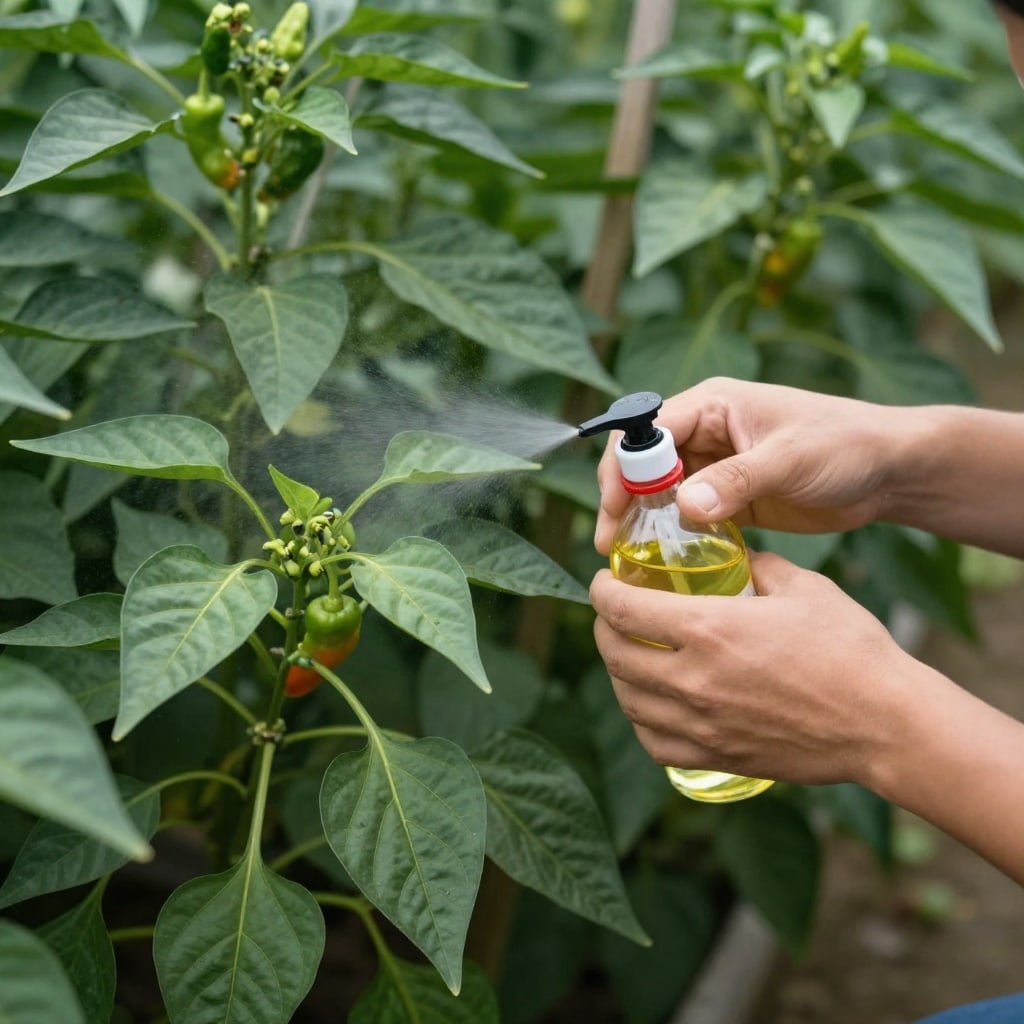
Targeted Application: Neem oil coats the leaf surface and disrupts the pest's feeding.
Timing is the most critical technical aspect of Neem application. Spraying in the heat of the day can burn your plants (phototoxicity), while spraying too late (after sunset) can miss the pests when they are most active. We target the undersides of leaves where most pests congregate and only apply sprays in the late evening when bees and other pollinators are safe. By using this technical protocol, we maximize the effectiveness of our organic inputs while protecting the biodiversity of the Evergreen Hideout.
Before you mix any spray, ask these five questions to ensure it's necessary and will be effective.
- Have I correctly identified the pest and its life stage? (e.g., Adult vs. egg vs. larva).
- Is the pest population above the economic injury level? (Is it actually causing damage that will affect my harvest?).
- Are beneficial insects already present and working? (Look for predators or parasitized pests).
- Is the weather suitable for spraying? (No rain forecast for 24hrs, temperatures below 30°C, low wind).
- Have I exhausted physical and mechanical controls first? (Hand-picking, water spray, exclusion).
If you answer "no" to any of the first three, do not spray. Observe for another 48 hours.
4. Summary and Your Next Move
Mastering organic pest management is a journey of observation and understanding. By identifying pests accurately, fostering biological allies, and using botanical tools effectively, you can protect your harvest without compromising your health or the environment. It requires patience and consistency, but the reward is a garden that is in harmony with nature. In the Evergreen Hideout, we view every pest not as an enemy to be destroyed, but as a symptom that guides us toward better soil and plant health.
Transform your garden's defense system in one month with this actionable plan.
- Week 1: Ceasefire & Assessment. Stop all non-essential spraying. Spend 10 minutes daily scouting. Identify your top 3 pest problems. Map their locations.
- Week 2: Habitat & Prevention. Plant one insectary strip (dill, alyssum, buckwheat). Install a pebble-tray water station for beneficials. Apply a fresh layer of mulch to all beds.
- Week 3: Targeted Intervention. For your #1 pest, implement the specific triage protocol from this guide (e.g., Aphid Triage, Bagrada Stack). Use manual/physical methods first.
- Week 4: System Refinement. Evaluate what worked. Begin a garden journal to note pest/predator cycles. Order or source beneficial insects (e.g., ladybug larvae) if needed for next season.
This plan moves you from reactive panic to proactive, systematic management.
What are your current pest challenges? I want to know which villain is giving you the most trouble right now. Are you dealing with a massive aphid explosion, or are you spotting the tell-tale signs of spider mites? Share your "pest master" questions and your success stories in the comments below. Let's grow a community of resilient and informed gardeners together!