Defeating Bagrada Bug: Organic Defense for Your Brassicas
A technical manual for identifying, intercepting, and eliminating the painted bug without synthetic chemicals.
1. Introduction: The Stealth Saboteur
In the Evergreen Hideout, few pests are as demoralizing as the Bagrada bug. Unlike large, slow-moving stink bugs that are easy to spot, Bagrada bugs are small, shield-shaped, and incredibly fast. They specialize in attacking the growing points of young Brassicas—cabbage, broccoli, and kale—often before you even realize they are in the garden. By the time you notice "starburst" wilting on the leaves, the bug has often already moved on, leaving the plant stunted or "blind," meaning it will never form a central head. Defeating this pest requires a proactive technical protocol that combines physical exclusion with biological warfare, ensuring your winter greens survive their most vulnerable stage.
Timing is everything. Bagrada bugs have two primary population peaks on the Highveld, aligning perfectly with our key Brassica planting seasons.
- Peak 1: Late Summer to Early Autumn (Feb-Apr): Overwintered adults emerge with the first rains to attack late-summer transplants and early autumn seedlings.
- Peak 2: Mid-Spring (Sep-Oct): The second generation hatches to devastate spring-planted brassicas. This is the most critical window for protection.
Your defense calendar must be set by these peaks. If you plant during these windows without protection, you are providing a feast.
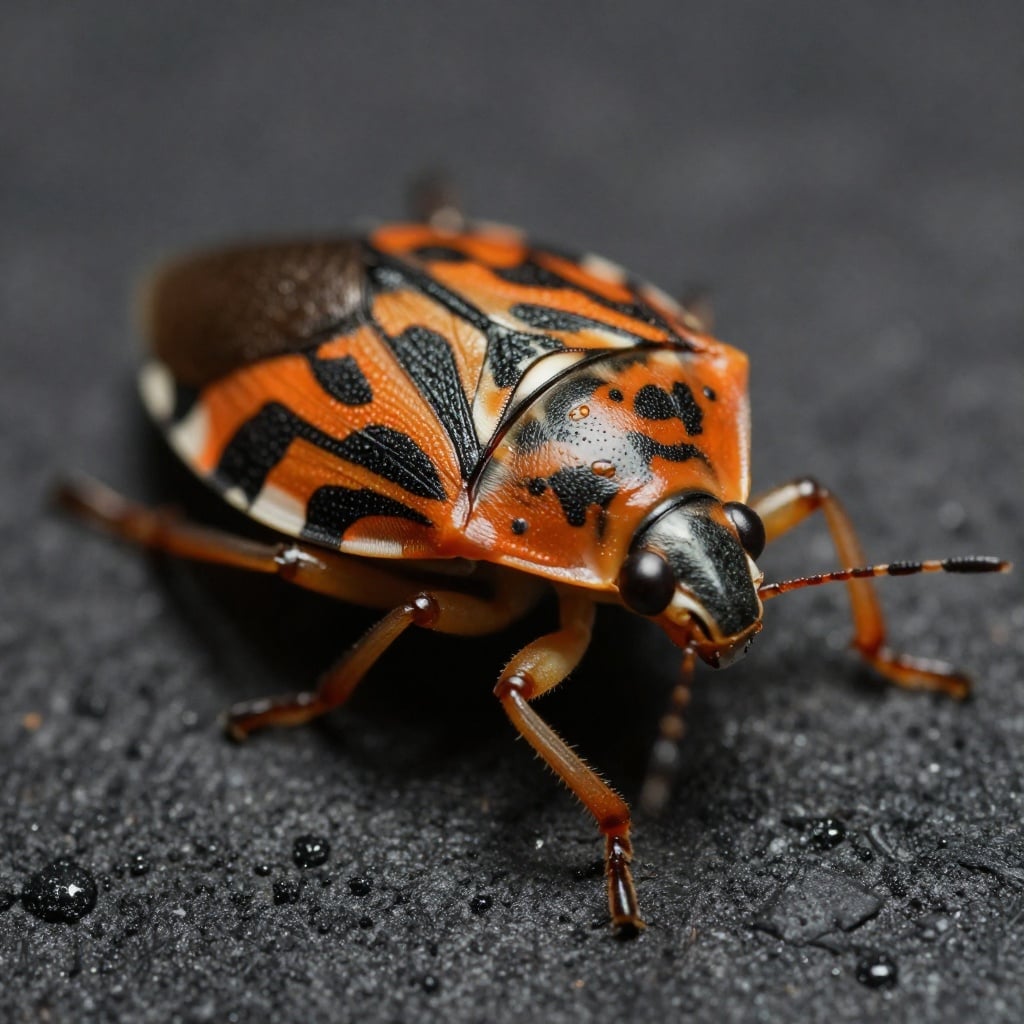
Know Your Enemy: The Bagrada bug is smaller than a ladybug but far more destructive.
The Bagrada bug is particularly problematic in Soshanguve during the transition from dry winters to early spring. They thrive in heat and are capable of overwintering in the soil or in the "Soil Armor" you have placed to protect your beds. This creates a paradox for the organic gardener; the very mulch we use in our guide on using maize stalks and grass can provide a hiding spot for Bagrada eggs. To manage this, we must refine our technical approach to soil hygiene and timing, ensuring that we don't accidentally foster a nursery for the very pests we are trying to avoid.
You cannot abandon mulch, but you can use it intelligently to break the bug's life cycle.
- Timed Application: Do not apply thick mulch until your brassica seedlings are well-established (4-6 true leaves) and under protective cover. Initially, leave a 15cm bare soil radius around each plant.
- Solarization of Mulch: Before spreading stored mulch (like grass clippings) near seedlings, spread it thinly on a black plastic sheet in full sun for 3-4 days. The heat will kill any hidden eggs.
- Alternative Barrier: Use a layer of sand or fine gravel as an initial soil cover. It provides similar moisture retention but is less hospitable for egg-laying than organic mulch.
2. Why This Topic Matters: The "Blind" Plant Syndrome
The primary reason the Bagrada bug is a "high-priority" pest is its method of feeding. It uses a needle-like proboscis to inject toxic saliva into the plant's apical meristem—the growing tip. This doesn't just damage the leaf; it terminates the plant's ability to produce new growth. If a young cabbage is hit by Bagrada bugs, it may continue to grow outer leaves, but it will never form a head, rendering months of work useless. This is why Bagrada management is a core chapter of the organic pest master manual. We cannot afford a "wait and see" approach with this insect.
Recognizing the earliest sign of attack can save a plant. The "starburst" pattern is a specific physiological response.
- What to Look For: A cluster of small, white or yellow chlorotic spots radiating out from a central point on a leaf, often near the midrib. The leaf may wilt or curl at that spot. This is where the bug injected its toxins.
- Immediate Action: Upon seeing this pattern, immediately inspect the entire plant, especially the growing tip and undersides of young leaves, for the fast-moving adults or clusters of tiny, bright orange eggs.
- Is it Salvageable? If the central growing tip is visibly damaged (brown, dead, or missing), the plant is "blinded." You can leave it to produce loose, edible leaves, but for a heading crop, it's best to remove it and replace with a protected seedling.
Furthermore, Bagrada bugs are "generalist" feeders within the Brassica family, but they also harbor a fondness for weeds like wild mustard. If your garden perimeter is unmanaged, these weeds act as a bridge, allowing the bugs to migrate into your intensive beds. By improving your soil health with biological tea from your DIY worm farm, you can increase the plant's sap pressure, making it slightly more difficult for the bug to feed. However, when populations are high, even the healthiest plant needs technical protection of a physical barrier to survive the initial onslaught.
Create a hostile moat around your garden to break the migration bridge.
- The 5-Meter Rule: Eliminate all wild mustard, shepherd's purse, and other brassica-family weeds within a 5-meter radius of your garden beds. This is a non-negotiable weekly task during peak seasons.
- Plant a Repellent Border: Establish a border of strong-smelling, non-brassica plants. Coriander, garlic, and Tagetes (marigolds) can act as a mild olfactory deterrent. While not foolproof, it adds a layer of confusion.
- Worm Tea as a Defense Booster: A weekly foliar spray of worm castings tea (1:10 dilution) doesn't repel bugs, but it does increase plant cell turgor pressure and speed recovery from minor feeding damage, buying you time to implement other controls.
3. The Technical Shield: Row Covers and Scouting
The most effective organic defense against the Bagrada bug is total physical exclusion. Because these bugs are so small, they can find the tiniest gaps in standard bird netting. We recommend using a high-density insect mesh or "frost fleece" draped over hoops to create a sealed environment for your young seedlings. This barrier must be installed the same day you transplant your Brassicas. Any delay gives the bugs a window to enter. The technical requirement of this infrastructure is that the mesh is fine enough to exclude the insect but porous enough to allow heat to escape; otherwise, your seedlings will cook in the Soshanguve sun.
An imperfectly installed cover is worse than none, as it creates a false sense of security.
- Mesh Specification: Use a woven insect mesh with holes no larger than 0.8mm x 0.8mm (often sold as "anti-insect netting" or "thrips netting"). Bagrada bugs are ~5mm long but can squeeze through surprisingly small gaps.
- Sealing the Edges: Bury the edges of the mesh under 10cm of soil, or weigh them down securely with sandbags or boards with no gaps. Do not simply pin it; bugs will crawl underneath.
- Ventilation & Height: Build hoops tall enough so the mesh doesn't touch the plants (allows for growth and prevents bugs from feeding through the fabric). In our heat, ensure the ends can be opened on cooler, cloudy days for airflow to prevent fungal issues.
- Duration: Keep covers on for the first 6-8 weeks, until plants are large and robust enough to tolerate some minor feeding damage.
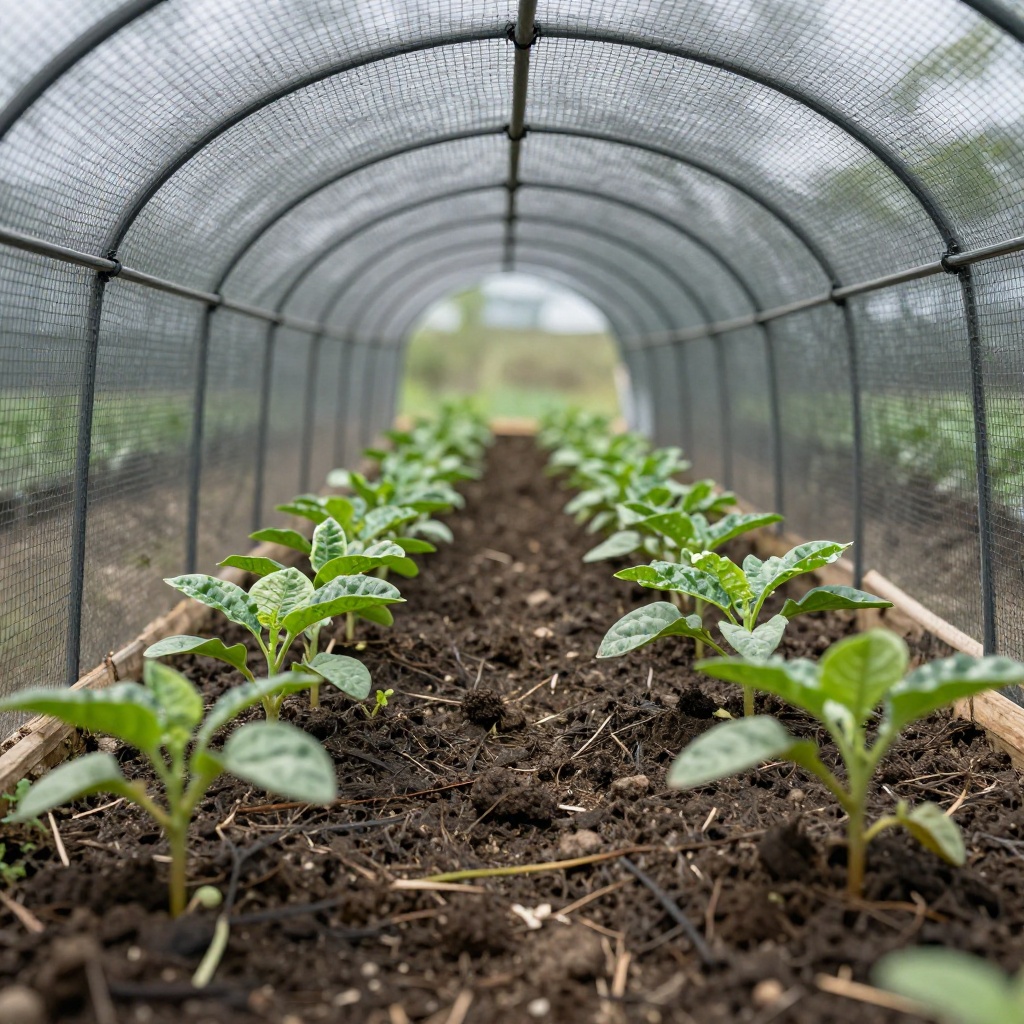
Passive Defense: If they can't land, they can't feed. Netting is the ultimate organic tool.
If you find that bugs have already breached your perimeter, you must switch to active scouting. Bagrada bugs are most active during the warmest part of the day, usually between 11:00 and 15:00. During this time, they move to the top of the leaves to bask and mate. You can manually remove them using a small handheld vacuum or by knocking them into a bucket of soapy water. While labor-intensive, this technical intervention is highly effective at breaking the breeding cycle before the females can deposit eggs into the soil near the base of your plants.
Turn scouting into a efficient, high-yield operation.
- Tools of the Trade:
- A small, battery-powered handheld vacuum (dedicated for garden use). Empty contents into soapy water.
- A wide-mouth jar half-filled with soapy water with a drop of cooking oil (breaks surface tension). Knock bugs directly into it.
- Scouting Pattern: On sunny days between 11am-3pm, approach plants slowly from the side to avoid casting a shadow. Check the apical meristem (growing tip) first, then the tops of young leaves, then the soil at the base for nymphs.
- Egg Hunting: Inspect the undersides of leaves for bright orange, barrel-shaped eggs laid in small clusters. Crush them immediately with your fingers.
- Frequency: During peak risk periods, scout every other day. Consistency is more important than duration.
4. Biological Sprays and Soil Management
When manual removal isn't enough, we turn to targeted organic sprays. Potassium-based insecticidal soaps and Neem oil are effective, but they must make direct contact with the bug to work. Because Bagrada bugs have a hard waxy coating, we recommend adding a "surfactant" to your spray—like a few drops of biodegradable dish soap—to help the organic treatment stick to the insect. Additionally, because the bugs lay eggs in the soil, we use a light dusting of minerals found in agricultural lime and wood ash around the base of the plants. The abrasive nature of the ash can deter nymphs as they emerge from the soil.
Your spray must overcome the bug's waxy shield (exoskeleton). This requires the right mixture and technique.
- Neem & Soap Combo (Most Effective): Mix 5ml cold-pressed Neem oil + 3ml insecticidal soap (or pure Castile soap) per litre of warm water. Shake vigorously. The soap emulsifies the oil and helps it spread over the bug's waxy coat, disrupting its cellular membranes.
- Application Technique: Spray must be directed. Hold the nozzle 15-20cm from the bug and give a short, targeted burst to drench it. General foliar spraying is wasteful and less effective.
- Timing: Spray in the early evening when bugs are less active and to avoid sun-scorch on oil-coated leaves. Reapply after rain.
- The Ash Barrier Method: Sift wood ash to a fine powder. On a completely dry, still morning, puff a thin ring of ash around each plant stem, creating a 5cm wide circle. Reapply after watering or wind. This physically irritates the soft-bodied nymphs.
Long-term management also involves "trap cropping." You can sow a small patch of highly attractive plants, like mustard greens, at the edge of your garden. The Bagrada bugs will congregate there first, allowing you to treat that small area intensively while keeping your main cabbage beds clean. This technical use of "decoy biology" is a hallmark of the Hideout’s philosophy. Once the season ends, ensure you rotate your Brassicas into an area that was previously occupied by onions or garlic, as the sulfurous compounds in those beds can help disrupt any remaining Bagrada populations as part of your pest management strategy.
A trap crop is a strategic sacrifice. To work, it must be more attractive than your main crop.
- Choice of Crop: Indian Mustard (Brassica juncea) varieties like 'Florida Broadleaf' are highly preferred by Bagrada over common cabbage. Plant it 2-3 weeks before your main brassicas.
- Placement: Plant the trap crop in a sunny spot upwind of your main garden. Bugs will encounter it first.
- Management: Do not treat the trap crop with anything initially. Let it become infested. Once heavy with bugs, you have two options: 1) Enclose the entire patch with a plastic bag, cut it at the base, and solarize it in the sun to kill all bugs, or 2) Spray the trap crop intensively with the Neem/soap combo to create a "dead zone."
- Crop Rotation as Defense: Follow brassicas with alliums (onions, garlic) or legumes (beans). The residue from allium roots can have a mild biofumigant effect on soil-dwelling nymphs.
5. Summary and Your Next Move
Defeating Bagrada bug is a battle of vigilance and technical precision. By combining the physical protection of fine mesh with strategic scouting and biological soil management, you can protect your Brassicas from the "blindness" that ruins so many South African harvests. It is an approach that values the health of the ecosystem over the convenience of a spray bottle, ensuring that the food you grow is as clean as it is abundant.
Integrate these actions into your seasonal gardening rhythm:
- Pre-Season (1 Month Before Planting):
- Clear perimeter weeds (5m rule).
- Prepare and solarize mulch.
- Build row cover infrastructure.
- Sow trap crop seeds.
- At Transplanting (Day 0):
- Install row covers immediately after planting. Seal edges.
- Apply initial ash barrier if not using full covers.
- Early Growth (Weeks 1-6):
- Maintain sealed covers.
- Begin weekly perimeter scouting and worm tea sprays.
- Monitor trap crop intensely.
- Mid-Season (Weeks 7+):
- If covers are removed, begin every-other-day scouting during peak sun.
- Use targeted Neem/soap sprays on any observed bugs.
- Reapply ash barrier weekly.
- Post-Harvest:
- Remove and destroy all brassica debris.
- Rotate bed to a non-brassica family crop.
Have you spotted a "painted bug" in your garden yet? I want to know if you have seen the characteristic starburst damage on your kales or if you have found a way to seal your row covers that works particularly well in Soshanguve. Are you currently using trap crops, or are you looking for more advice on making your own insecticidal soap? Share your pest-fighting stories and your questions in the comments below, and let us work together to make the Evergreen Hideout a Bagrada-free zone!