Understanding Parasitoid Wasps: Nature’s Aphid Control
A technical manual for utilizing Braconid and Ichneumonid wasps as biological agents for internal pest suppression.
1. Introduction: The Internal Predator
In the Evergreen Hideout, we differentiate between "predators" that eat pests from the outside and "parasitoids" that consume them from within. Parasitoid wasps are perhaps the most efficient biological control agents in the South African garden, specifically targeting aphids, caterpillars, and beetle larvae. Unlike the common paper wasp, these species are often microscopic and do not possess a stinger meant for humans. Instead, the female uses a specialized egg-laying organ called an "ovipositor" to inject her eggs directly into the body of a living host. As the eggs hatch, the larvae consume the pest from the inside out, eventually emerging as adults to repeat the cycle. This technical process provides a level of pest suppression that is impossible to achieve with manual intervention alone.
This internal consumption is a masterclass in biological efficiency. The wasp larva strategically avoids vital organs in the host initially, keeping it alive to provide fresh food. Only in its final instar does it consume the host entirely, often inducing specific behavioral changes (like the aphid ceasing to feed and anchoring itself) before pupation. This is why a parasitized aphid transforms into a distinctive, bloated "mummy"—it's a living larder that has been hollowed out.
- Host Specificity: Many parasitoids are highly specialized. Aphidius colemani targets green peach and melon aphids, while Cotesia glomerata targets cabbage white butterflies. This specificity means they pose no threat to non-target species.
- Reproductive Rate: A single female can parasitize hundreds of hosts. This exponential growth potential allows a small initial population to rapidly suppress a pest outbreak.
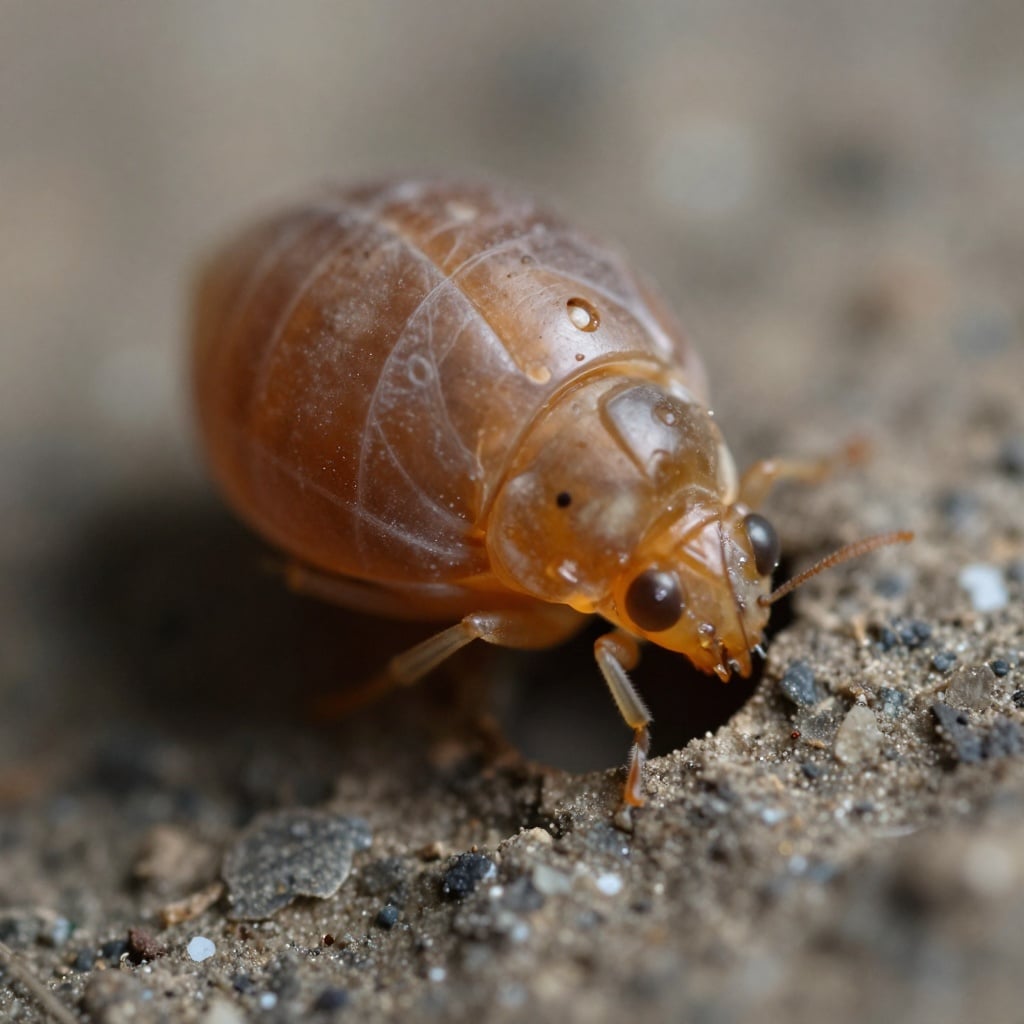
Biological Evidence: A puffed-up, golden aphid is a sign that the wasps are already at work.
The success of these wasps in the Hideout depends on a stable microclimate and a consistent supply of secondary food sources. Because many parasitoids are highly sensitive to heat and desiccation, they require the humidity-buffering effects provided by engineering deep fertility with the trench method. The deep organic matter keeps plants turgid and the air within the leaf canopy slightly cooler, allowing the tiny wasps to survive the midday Soshanguve heat. By fostering this environment, you ensure that your "internal predators" stay on-site to defend your high-value vegetables.
On the Gauteng Highveld, our intense summer sun and dry winds are the primary barriers to sustaining these delicate wasps. The trench method is not just about fertility; it's a climate-control system for soil-dwelling life. For parasitoids, the critical zone is the Boundary Layer—the few millimeters of air directly above and within the plant canopy. Here’s how to engineer it:
- Create a Living Mulch: Low-growing plants like creeping thyme or clover between rows increase humidity at the critical insect level.
- Utilize Vertical Structure: Taller companion plants (like maize or sunflowers) on the western side of beds provide crucial afternoon shade, lowering canopy temperature by several degrees.
- Strategic Watering: Drip irrigation maintains soil moisture without wetting leaves, while occasional early morning overhead misting (not watering) can provide essential drinking water for adult wasps without promoting fungal disease.
2. Why This Topic Matters: The "Mummy" Signal
The primary reason to understand parasitoid wasps is to prevent the accidental destruction of your biological allies. Many gardeners see "aphid mummies"—aphids that have turned hard, tan, or gold—and assume the plant is heavily infested, leading them to apply a broad-spectrum organic spray. However, these mummies are actually "wasp nurseries." If you spray them, you kill the developing parasitoid that was about to emerge and clean the rest of your bed. This technical identification is a core discipline; recognizing the difference between a live pest and a parasitized one allows you to make informed technical decisions about when to intervene.
Developing a diagnostic eye is a non-negotiable skill. Use this guide to distinguish between a live colony and a wasp-controlled one:
Live Aphid Colony Indicators:
- Color & Texture: Soft, green, pink, or black bodies.
- Movement: Active crawling, especially on new growth.
- Exit Holes: None present.
- Ant Activity: High; ants "farm" aphids for honeydew.
Parasitized Colony Indicators:
- Color & Texture: Hard, tan, golden, or bronze "mummies."
- Movement: Mummies are stationary, fixed to the leaf.
- Exit Holes: Small, neat circular hole in the mummy's back (the wasp emergence hole).
- Ant Activity: Low or absent; ants abandon non-producing mummies.
Action Rule: If more than 30% of the aphids in a cluster are mummies, do not spray. The wasps have the situation under control and are reproducing on-site.
Furthermore, parasitoid wasps have a "host-seeking" ability that far exceeds that of larger predators like ladybugs. They can detect the specific chemical distress signals (Volatile Organic Compounds) that a plant releases when it is being eaten. This allows them to find small, hidden pest colonies before they become a visible problem. By ensuring your soil has the microbial diversity described in our guide to your DIY worm farm, you support the plant's metabolic ability to produce these chemical signals. A healthy, well-nourished plant is more "vocal" in its call for help, ensuring the wasps arrive exactly when and where they are needed.
This is where Soil Biology directly dictates pest management outcomes. The plant's "cry for help" is a complex terpenoid or phenolic compound. Synthesizing these compounds requires specific nutrients and energy, which are efficiently supplied by a robust soil food web.
- The Worm Farm Link: Worm castings are rich in cytokinins and other plant growth hormones that enhance metabolic vigor, enabling the plant to "shout" louder without sacrificing growth.
- Mycorrhizal Networks: These fungal symbionts not only supply phosphorus but also act as information highways, potentially alerting nearby plants to begin producing defensive volatiles preemptively.
- Practical Implication: A weekly drench with vermicompost tea isn't just fertilizer; it's a strategic investment in your garden's early-warning defense system.
3. The Technical Protocol for Wasp Recruitment
While the larvae of these wasps are carnivorous, the adults are strictly nectar-feeders. Because parasitoid wasps are generally small with very short mouthparts, they cannot access nectar from deep, trumpet-shaped flowers. They require "shallow-access" blooms, specifically those from the Apiaceae family, such as dill, coriander, and fennel. We recommend planting these "Insectary Plants" at the ends of every vegetable row. This technical layout ensures that the adult wasps have a high-energy fuel source within centimeters of the pests they need to parasitize. This spatial engineering is a key pillar of our Garden Police strategies.
To move beyond simple recommendations and into systematic design, follow this guide to ensure a season-long nectar supply for multiple beneficial insect families. Plant these species in succession for continuous bloom:
Primary Insectary Plants for Parasitoid Wasps:
- Dill, Coriander, Fennel (Apiaceae Family): The classic choice. Their shallow umbel flowers are perfect landing pads for tiny wasps. Soshanguve Tip: Succession sow every 3-4 weeks. Coriander bolts quickly in heat; plant it in partial afternoon shade.
- Alyssum, Sweet (Brassicaceae Family): An excellent low-growing, spreading ground cover for inter-planting between vegetable rows. It provides constant, low-level blooms and tolerates light foot traffic.
- Buckwheat (Polygonaceae Family): A fast-growing green manure that flowers in just 4-6 weeks. It supports a wide range of beneficials. Cut and drop it as mulch before it sets seed to prevent excessive self-seeding.
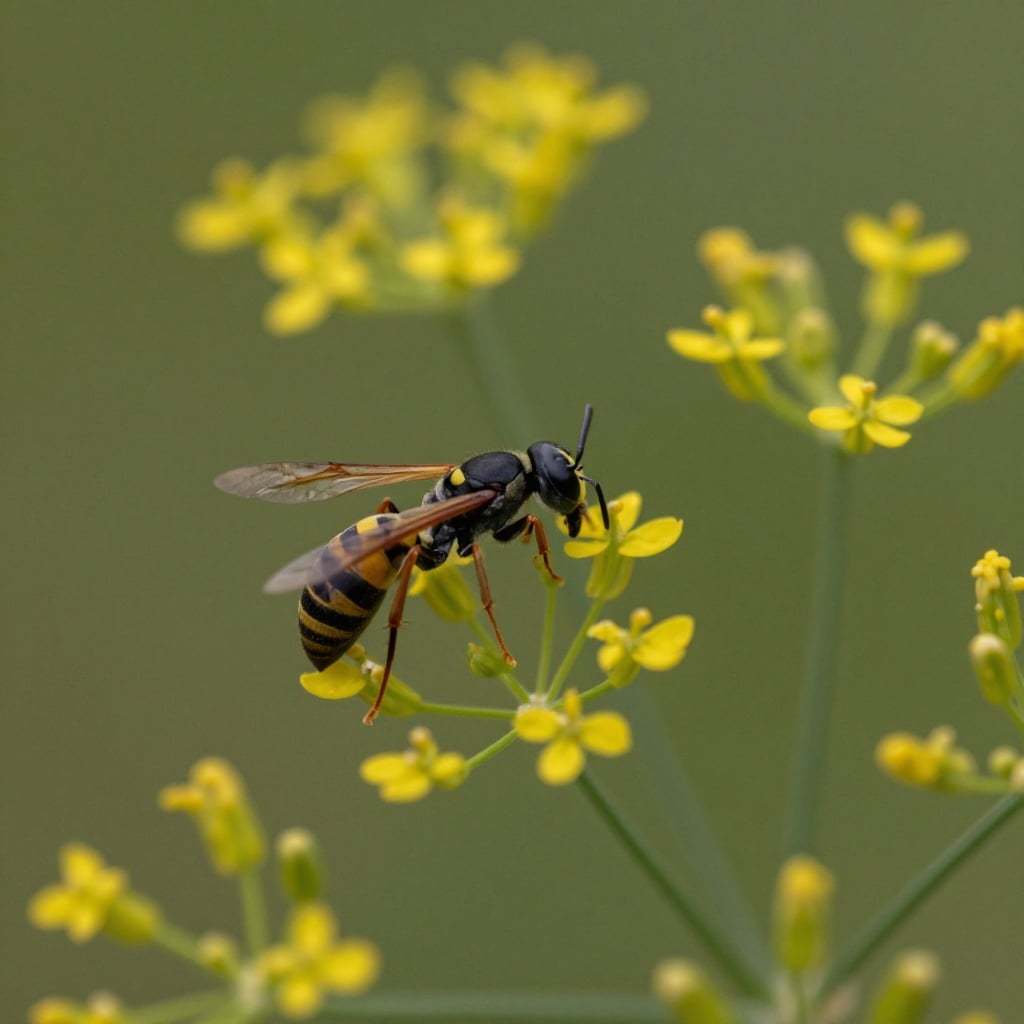
Energy Supply: Tiny wasps require shallow flowers to fuel their host-seeking behavior.
Water management is another technical requirement for maintaining a wasp population. In our dry climate, small wasps can quickly dehydrate. We recommend maintaining a high level of organic matter on the soil surface and lightly misting the garden in the early morning. This provides tiny droplets of water that the wasps can safely drink without the risk of drowning. By providing nectar and water in close proximity to your crops, you transform the Hideout into a permanent habitat for these wasps, creating a self-sustaining cycle of pest control that operates without human labor.
Water provision is a precise technique. A puddle or birdbath is a death trap for micro-wasps. The goal is to provide accessible humidity and micro-droplets.
- The Pebble Tray: Fill a shallow tray with pebbles or gravel. Add water until it is just below the top of the pebbles. Place these in shaded areas near insectary plantings. Wasps can land safely and drink from the damp surfaces.
- The Moss Reservoir: A pot saucer filled with moist sphagnum moss provides both evaporation for humidity and direct drinking surfaces.
- Misting Technique: If misting, use the finest spray setting and target non-flowering foliage in the early morning. The goal is to leave a web of tiny droplets, not to wet the soil surface.
Critical Link: This micro-habitat creation is a perfect example of DIY Infrastructure serving Pest Management. Building a pebble tray is a simple, permanent infrastructure project that pays dividends in biological stability.
4. Integration with Other Organic Controls
When you have a healthy parasitoid population, you must be extremely selective with your botanical sprays. Even Neem oil, while relatively safe, can be disruptive if applied heavily to plants that are currently housing aphid mummies. We recommend a "Spot Treatment" approach: only spray the areas of a plant that are heavily infested and show no signs of parasitism. If you see more than 20 percent mummies in a colony, the wasps have already won the battle, and your intervention is unnecessary. This technical patience is the hallmark of advanced organic management.
To systematize this "technical patience," follow this step-by-step protocol before any spray application:
- Survey: Inspect the infested plant thoroughly. What percentage of the pests are mummies? Are there active, mobile adult wasps present?
- Assess:
- Scenario A: If the mummy count is over 20% OR adult wasps are seen: Do not spray. Monitor for 48 hours. The biological control is active.
- Scenario B: If the mummy count is under 10% AND the pest population is actively spreading to new growth: Proceed to spot treatment.
- Execute Spot Treatment:
- Use a small, handheld sprayer or even a cotton swab for precision.
- Apply material (e.g., diluted neem) directly to the cluster of live pests. Avoid flowers, mummies, and surrounding leaves as much as possible.
- Always spray in the late evening when most adult wasps are less active.
Finally, consider the long-term mineral balance of your soil. Trace elements found in agricultural wood ash help plants build the complex proteins used in their chemical signaling systems. When a plant has the right minerals, it can produce stronger pheromones to attract more wasps. By treating the garden as a unified biological system, you move away from the "spray and pray" mentality and into a realm of technical stewardship. At the Hideout, we don't just kill pests; we engineer a world where the pests provide the food for the very creatures that keep them in check.
The role of minerals like boron, molybdenum, and zinc is often overlooked. They act as enzyme cofactors—the tiny tools plants use to build complex signaling compounds.
- Wood Ash Application: A light, annual dusting (about one handful per square meter) provides soluble potassium, calcium, and trace elements. In our often-acidic Highveld soils, this can gently raise pH and improve overall nutrient availability.
- The Vital Connection: A plant deficient in boron may be "mute"—physically unable to synthesize the full suite of distress volatiles, rendering it invisible to searching parasitoids.
- Holistic Practice: This is why soil testing and amending, as discussed in the Soil Biology pillar, is not separate from pest control; it is the foundational layer of intelligent, proactive defense.
5. Summary and Your Next Move
Understanding the role of parasitoid wasps shifts your perspective from being a gardener who fights nature to one who collaborates with it. By providing specific nectar sources, water, and humid microclimates these wasps require, you recruit a 24-hour security force that is far more effective than any chemical application. It is a rewarding biological journey that connects the health of your soil to the success of your harvest. At the Evergreen Hideout, we treat the parasitoid wasp as an essential partner in our food security, ensuring that our beds remain vibrant, balanced, and productive through the power of nature's own design.
Transitioning to a wasp-centric pest management system is a phased technical process. Implement this plan over a single growing season:
- Phase 1: Observation & Ceasefire (Weeks 1-2): Halt all broad-spectrum sprays immediately. Begin daily monitoring for aphid mummies and adult wasps. Map the pest hotspots in your garden.
- Phase 2: Habitat Construction (Weeks 3-6): Sow insectary plants (dill, alyssum, buckwheat) in strategic locations. Install 2-3 pebble tray water stations. Apply a light wood ash amendment if your soil pH is below 6.2.
- Phase 3: Selective Intervention (Week 7 onward): Employ the spray decision protocol. Practice spot treatment only. Begin relocating leaves covered in mummies to new pest outbreaks to "inoculate" those areas with wasp pupae.
- Phase 4: System Refinement (Ongoing): Keep a garden log. Note which insectary plants attract the most wasps. Refine your microclimate with additional shade or living mulch based on wasp activity during heatwaves.
Have you seen aphid mummies in your garden beds? I want to know if you have started looking for the "golden" sign of parasitism or if you are planning to sow your first row of dill and fennel this season. Have you noticed a decrease in aphid pressure since you stopped using broad-spectrum sprays, or are you looking for more advice on identifying different wasp species? Share your "wasp-watching" stories and your biological questions in the comments below. Let us work together to make the Evergreen Hideout a thriving sanctuary for our most effective biological allies!