Powdery Mildew Solutions: The Bicarbonate and Milk Spray Method
A technical manual for utilizing pH manipulation and enzymatic action to eliminate mildew in high-density garden beds.
1. Introduction: The White Dust of the Dry Season
In the Evergreen Hideout, powdery mildew is the most recognizable fungal challenge, often appearing as a fine white dusting on the leaves of pumpkins, butternuts, and cucumbers. Unlike blight that thrives in wet conditions, powdery mildew is a "dry-weather" fungus that prefers high humidity around the leaf surface but dry soil and stagnant air. These spores do not require water to germinate; instead, they use specialized structures called "haustoria" to penetrate the leaf surface and extract nutrients. Left unmanaged, the mildew spreads across the foliage, blocking photosynthesis and eventually causing the leaves to shrivel and die, which significantly reduces the energy available for fruit development. Understanding the specific environmental triggers for this fungus is the first step in maintaining a productive and vibrant garden.
On the Gauteng Highveld, our climate creates a perfect storm for powdery mildew. We experience cool, dewy nights followed by hot, dry days—precisely the fluctuating humidity mildew spores exploit. Furthermore, our intense afternoon sun can stress plants, weakening their epidermal defenses and making haustorial penetration easier. Recognizing this local pattern is key; mildew isn't a sign of failure but a predictable environmental challenge to be managed with specific tactics.
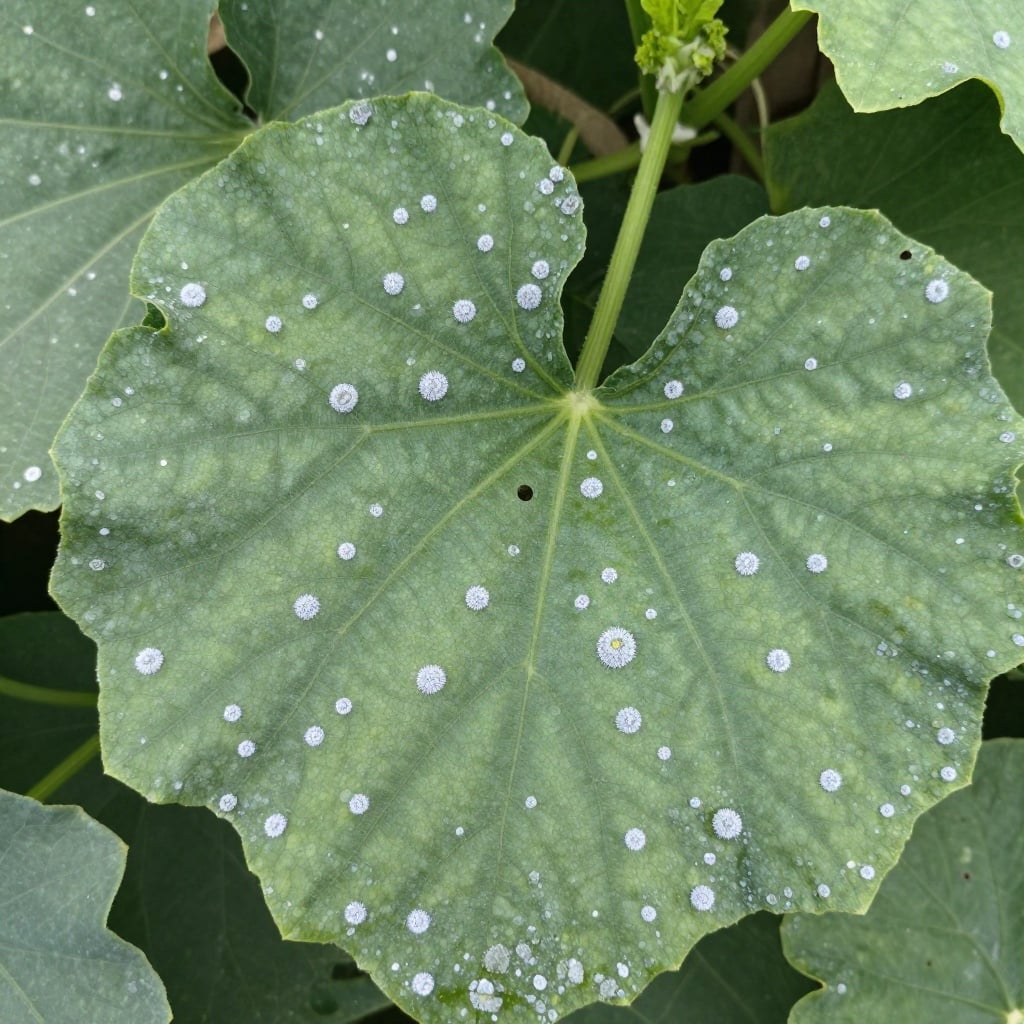
Surface Colonization: The white powder is actually a network of fungal mycelia and spores.
Success in managing this fungus begins with the physical infrastructure of your beds. Because stagnant air is the primary driver of mildew outbreaks, we utilize vertical growth strategies that lift vines off the ground and into the wind. This aerodynamic approach breaks up the boundary layer of still air that surrounds leaves, physically disrupting fungal spores and preventing them from settling. Furthermore, by ensuring your plants have deep moisture reserves provided by engineering deep fertility with the trench method, you prevent the water stress that makes the plant’s immune system more susceptible to fungal attack. A well-hydrated plant is always your best defense against surface-dwelling pathogens.
Vertical trellising is your first and most powerful line of defense. However, in Soshanguve, we must engineer airflow with intention.
- Orient Trellises North-South: This alignment ensures both sides of the plant receive morning and afternoon sun, drying dew quickly and maximizing air movement across the foliage.
- Prune for Open Architecture: Selectively remove some inner leaves and secondary vines to create "air chimneys" within dense plants. This isn't about reducing leaf count, but about eliminating pockets of stagnant air.
- Elevate with "Stilts": For sprawling plants like pumpkins, place a brick or flat stone under developing fruits. This lifts the main vine off the damp soil mulch, breaking the humidity bridge.
2. Why This Topic Matters: pH and Enzymatic Warfare
The primary reason the bicarbonate and milk method is so effective lies in the chemical and biological vulnerability of the fungus. Powdery mildew requires a slightly acidic environment on the leaf surface to thrive. By applying sodium bicarbonate (baking soda), we technically shift the surface pH to an alkaline level (above 8.0), which creates a chemical environment where fungal spores cannot survive. This mechanism effectively denatures the proteins in the spore wall, acting as a non-toxic way to manage the disease without the use of sulfur-based fungicides that can harm beneficial soil biology.
The leaf surface, or phyllosphere, has its own microbiome and pH level, influenced by plant exudates and airborne particles. Powdery mildew secretes acids to maintain its preferred acidic niche (pH 5.0-6.5). Baking soda (sodium bicarbonate) dissolves into sodium ions and bicarbonate ions. The bicarbonate acts as a powerful buffer, neutralizing the fungal acids and raising the local pH to a level that disrupts the fungus's cellular ion balance, causing it to collapse. This is a contact action; it does not systemically enter the plant.
- Key Distinction: This is fungistatic (inhibits growth) more than strictly fungicidal (kills outright). It stops the spread and allows the plant's defenses and the sun-activated milk to finish the job.
- Why Not Potassium Bicarbonate? While often recommended, potassium bicarbonate is more costly and less readily available in Soshanguve. Sodium bicarbonate is highly effective and safe when used at the correct dilution.
The addition of milk to the spray provides a secondary biological weapon. Milk contains a protein called lactoferrin and various salts that, when exposed to the ultraviolet rays of the sun, produce free radicals that are toxic to the fungus. Essentially, milk acts as a solar-powered antiseptic. Furthermore, the fats in the milk act as a natural "sticker," helping the bicarbonate adhere to the waxy surface of the leaves. By using these common household items, we foster the self-sufficiency of the Hideout while utilizing the microbial strengths described in our guide to your DIY worm farm. These methods ensure that we are working with the physics of the environment rather than against them.
The reaction is specifically triggered by sunlight. The riboflavin (vitamin B2) in milk absorbs UV energy, which then reacts with oxygen and the lactoferrin to produce short-lived, highly reactive oxygen species. These oxidize and damage the fungal membranes. This means the spray must be applied in sunlight to be fully effective.
- Sourcing for Efficacy: Full-cream, unpasteurized milk is ideal due to higher enzyme and fat content. However, standard full-cream store-bought milk works very well. Avoid long-life (UHT) milk, as the ultra-high heat processing denatures the crucial proteins.
- The Surfactant's Role: The single drop of biodegradable soap is critical. It reduces the surface tension of the water, allowing the mixture to spread as a thin film over the leaf rather than beading up and rolling off the waxy cuticle. This ensures complete coverage.
3. The Technical Protocol for Mixing and Application
To prepare this organic fungicide, you must follow a precise ratio to avoid "leaf burn" from the salt in the bicarbonate. The standard technical formula is 10ml (two teaspoons) of bicarbonate of soda mixed with 1 liter of water. To this, add 300ml of milk (full cream is preferred for its fat content) and a single drop of biodegradable dish soap to act as a surfactant. Shake the mixture well to ensure the bicarbonate is fully dissolved. If granules remain undissolved, they can clog your sprayer or create "hot spots" on the leaves that lead to tissue damage. This mixture should be used immediately while the biological components are most active.
Precision prevents phytotoxicity (leaf burn). The sodium in baking soda can cause osmotic stress to leaf cells if too concentrated. Follow this mixing ritual:
- Dissolve First: Always dissolve the bicarbonate completely in a small amount of warm water first. This prevents undissolved crystals.
- Cold Dilution: Add this concentrate to the remainder of the cold water in your sprayer. Cold water helps preserve the milk proteins.
- Add Milk & Soap: Stir in the milk and the single drop of soap. Do not shake vigorously after adding soap, as it can create excessive foam that clogs sprayers.
- Use Immediately: The mixture is not stable. The bicarbonate will begin to react with the milk. Mix only as much as you can apply within one hour.
Scale for Large Areas: For a standard 5L knapsack sprayer, use 50ml bicarbonate, 1.5L milk, 5L water, and 3 drops of soap.

Total Coverage: Powdery mildew often starts on the top of the leaf but can hide in the crevices of the stem.
The timing of the application is critical for the milk's enzymatic action. Unlike Neem oil which is applied at dusk, the milk-bicarbonate spray should be applied in the early morning as the sun is rising. This allows the UV rays to activate the antiseptic properties of the milk throughout the day. You must achieve total coverage, spraying both the tops and bottoms of the leaves. Because powdery mildew spreads so rapidly, we recommend a preventative spray once every ten days during the dry spring and autumn months, or once every five days if you already see active white spots in your beds.
Correct application is what transforms a good recipe into a reliable technical protocol.
- The "Morning Dew" Window: Apply just after the morning dew has evaporated, but before 10 AM. This gives the leaves time to dry fully in the sun, activating the milk and preventing the extended wetness that other fungi love.
- Technique for Coverage: Hold the sprayer nozzle 15-20cm from the leaf. Use a fine mist setting. Spray from below upwards to coat the undersides first, then finish with the tops. The goal is a fine, even gloss, not dripping runoff.
- Strategic Spray Schedule:
- Preventative (Healthy Beds): Begin at first true leaf stage on susceptible crops. Spray every 10-14 days.
- Curative (Active Infection): Spray immediately upon detection, then again 3 days later, then move to a 5-day interval until controlled, then revert to preventative.
- Post-Rain: Always spray after a heavy rain that may have washed off previous applications.
4. Environmental Hygiene and Mineral Support
While the spray is a powerful curative tool, long-term mildew control requires strict garden hygiene. Once a leaf is more than 50 percent covered in mildew, it is no longer contributing energy to the plant and should be carefully pruned away. These infected leaves must never be left on the ground, as the spores can remain viable for long periods. Instead, dispose of them through the 18-day hot compost method, where high temperatures will neutralize the fungal pathogens. Keeping the "Soil Armor" under your plants clean and dry, as described in our guide on using grass mulch, is also essential for reducing the humidity at the base of the plant.
Sanitation breaks the disease cycle. Implement this protocol weekly during mildew season:
- Scout with Gloves: Wear disposable gloves or dip your hands in a milk spray solution before handling plants to avoid spreading spores.
- Prune Strategically: Use sharp, sterilized secateurs (wipe with methylated spirits between plants). Cut affected leaves at the petiole base. Do not compost these on-site unless you have a verified hot compost system.
- Bag and Remove: Place pruned material directly into a sealed plastic bag. This can be added to a municipal green waste bin or a dedicated, far-away compost pile that you don't use for vegetable beds.
- Clean Tools & Footwear: Spores cling to tools and shoes. Clean tools after use and have a designated foot-washing station at the garden entrance during high-risk periods.
Finally, we must support the plant's structural defenses through mineral nutrition. Silicon and calcium are two minerals most responsible for creating a "tough" leaf surface that haustoria cannot easily penetrate. We achieve this by applying minerals like wood ash around the root zone. These minerals act as a biological shield; they are absorbed by the plant and deposited in the cell walls, making them harder and more resistant to fungal penetration. Additionally, potassium in "Liquid Gold" from your worm farm or compost tea helps regulate the plant’s stomata, improving its water-use efficiency and overall resilience. A mineral-dense plant grown in a well-ventilated system is rarely overwhelmed by powdery mildew, ensuring the Evergreen Hideout stays productive and green.
This is where Soil Biology and mineral management become your strategic, long-term mildew solution. You are not just feeding the plant; you are fortifying its architecture.
- Silicon (Si): The plant's "body armor." While not a classic nutrient, it is deposited as silica in cell walls. Source it from rice hulls in your mulch or from specific silicate rock dusts. A plant with high silicon content has thicker, more rigid leaves that physically resist haustorial penetration.
- Calcium (Ca): Critical for cell wall integrity and membrane stability. A calcium-deficient plant has "leaky" cell walls, making it easier for fungi to invade. Wood ash and crushed eggshells (best added to compost first) are excellent local sources.
- The Potassium Connection: As detailed in our guide on agricultural wood ash, potassium regulates stomatal opening. Efficient stomata mean less water stress and a more stable internal environment, making the plant less susceptible to the stress signals that attract mildew.
Actionable Regimen: A monthly soil drench with worm tea (for biology) combined with a light top-dressing of wood ash (for Ca/K/pH) provides a dual-action, systemic defense that complements your foliar spray protocol.
5. Summary and Your Next Move
Powdery mildew management is a technical exercise in pH manipulation and environmental control. By utilizing the bicarbonate and milk method, you can eliminate fungal colonies without introducing synthetic toxins into your food supply. It is a rewarding biological approach that turns common pantry items into a professional-grade defense system. At the Evergreen Hideout, we treat every white spot as a signal to improve our airflow and mineral balance, ensuring our vines remain healthy and our harvests are heavy. With these technical tools in your kit, you can confidently grow even the most mildew-prone crops in the Soshanguve sun.
Deploy this multi-layered defense system from the first sign of mildew or as a seasonal preventative:
- Layer 1: Environmental Design (Permanent)
- Orient beds and trellises north-south.
- Practice selective pruning for airflow.
- Use drip irrigation, not overhead watering.
- Layer 2: Plant Fortification (Ongoing)
- Amend soil with silicon and calcium sources (rice hulls, wood ash).
- Apply monthly worm tea or compost tea drenches.
- Ensure deep watering via the trench method to prevent drought stress.
- Layer 3: Curative Action (As Needed)
- Mix and apply bicarbonate-milk spray at first signs, following the morning-sun protocol.
- Prune and destroy severely infected leaves with sanitation discipline.
- Adjust spray frequency based on disease pressure (preventative vs. curative schedule).
Are your pumpkin leaves looking dusty? I want to know if you have tried the milk spray method before or if you are currently struggling with mildew on your cucumbers. Have you noticed a difference in mildew levels between your trellised plants and those on the ground, or are you looking for more advice on mixing the correct ratios for your specific sprayer? Share your mildew-fighting stories and your questions in the comments below. Let us work together to keep the Evergreen Hideout vibrant and fungi-free!