Low-Cost Trellis Systems: Building Supports for Climbing Crops
A technical manual for utilizing structural engineering and salvaged materials to maximize vertical growing space.
When ground space is limited, the only direction to grow is up. This guide details how to build robust, inexpensive structures that turn climbers and vining plants into high-yielding, disease-resistant vertical walls of food.
1. Introduction: The Vertical Advantage
In the Evergreen Hideout, our footprint is finite, but our vertical potential is limitless. Low-cost trellis systems are not merely aesthetic additions; they are technical tools designed to increase the yield per square meter by moving high-volume crops like cucumbers, beans, and indeterminate tomatoes off the soil surface. By growing upward, we utilize the third dimension of our garden, allowing for higher planting densities and significantly easier harvesting. Furthermore, vertical growth is a key cultural defense against the soil-borne pathogens and pests that thrive in the stagnant air at ground level. A well-engineered trellis transforms a sprawling, unmanaged patch into a highly organized and productive agricultural system.
The Core Benefits of Vertical Gardening:
- Space Multiplication: Turns a 1m² ground footprint into 3-4m² of growing surface.
- Disease Suppression: Elevates foliage into better airflow, reducing humidity and fungal diseases like powdery mildew and blight.
- Pest Management: Lifts fruit off the ground, away from soil-dwelling pests like slugs and many beetles.
- Improved Fruit Quality: Fruits hanging freely develop more uniformly, with better color and fewer blemishes.
- Harvest Efficiency: No more bending or searching through dense foliage; produce is at eye and hand level.
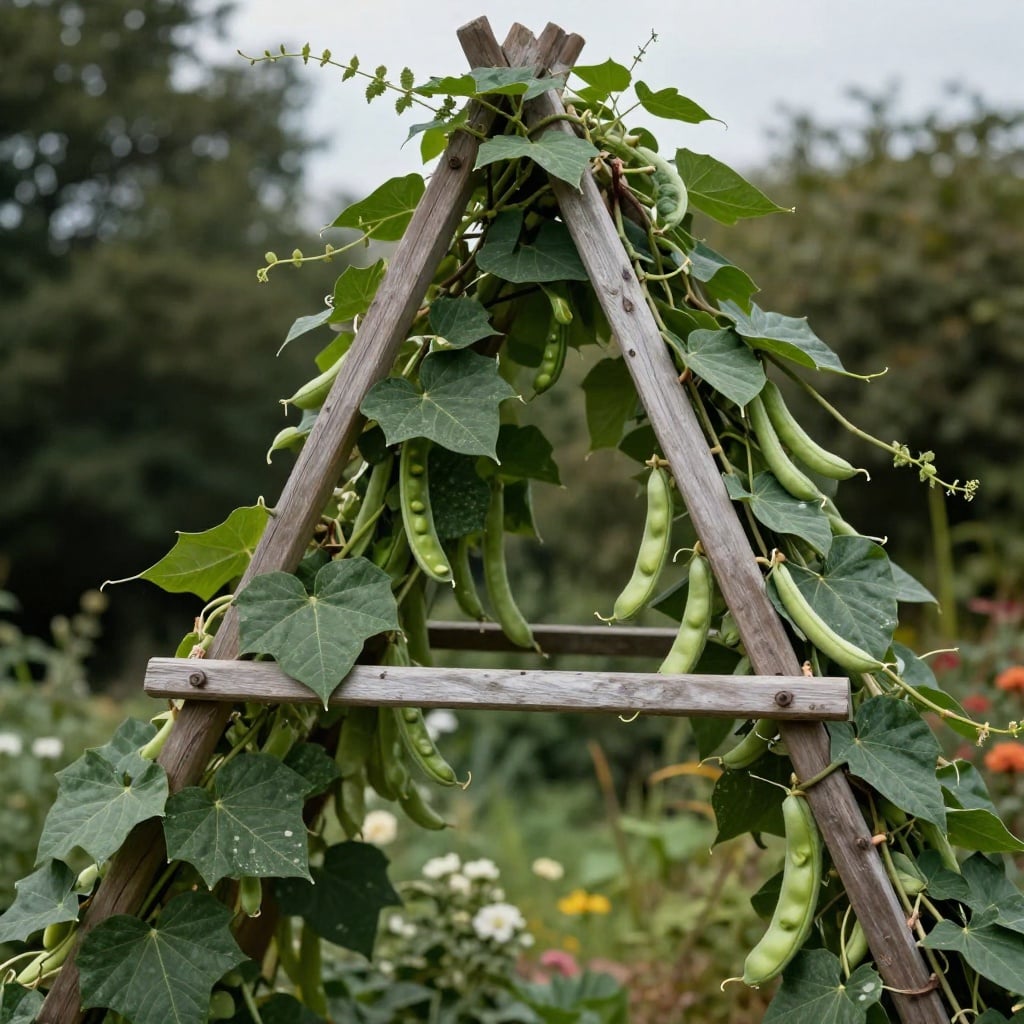
Structural Efficiency: Vertical systems maximize sunlight exposure and airflow.
This vertical approach is essential for managing the high-humidity challenges of the Soshanguve rainy season. When plants are lifted off the ground, they benefit from the increased wind speeds that prevent the formation of the moisture films required for fungal pathogens like powdery mildew and tomato blight to take root. By integrating these structures with the nutrient-rich foundations of the trench method, we ensure that our climbing crops have the massive energy reserves needed to pump water and minerals meters above the soil surface. This is the intersection of structural engineering and biological potential—building upwards requires building downwards with deep fertility first.
2. Why This Topic Matters: Airflow and Ergonomics
The primary reason trellising matters is the technical optimization of the garden microclimate. When plants sprawl on the ground, they create a dense, humid mat that traps CO2 and moisture, creating a perfect nursery for pests like slugs and snails. Lifting the canopy allows the sun to reach the soil surface, helping to dry out the "Soil Armor" and discouraging nocturnal pests. Additionally, trellising makes the application of organic treatments much more efficient. Having the foliage displayed vertically ensures you can achieve the "total coverage" required for effective pest suppression, as the spray can penetrate the canopy rather than resting on top of a dense ground mat.
The Ergonomics of a Vertical Garden:
From an ergonomic perspective, vertical systems reduce the physical strain on the gardener and increase observational accuracy.
- Easier Harvesting: Picking beans, peas, or cucumbers at chest height is faster and causes less back strain.
- Improved Scouting: Pests and diseases are immediately visible on an open, vertical plant face, allowing for early intervention.
- Simplified Pruning & Training: It's easier to spot and remove suckers on tomatoes or direct cucumber vines.
- Accessibility: Makes gardening more accessible for those who have difficulty bending or kneeling.
3. Technical Protocols for Low-Cost Supports
The best trellis is the one you can build with materials on hand. Here are two proven, low-cost systems.
System 1: The Bamboo or Pole A-Frame
One of the most cost-effective systems we use at the Hideout is the "Cattle Panel Arch" or the "Bamboo A-Frame." This is ideal for beans, peas, light squash, and cucumbers. Construction Steps:
- Gather Materials: 6-8 sturdy poles (bamboo, treated saplings, or timber) 2.5-3m long.
- Form the A: Push the base of two poles 30-40cm deep into the soil at the edge of your bed, angling them towards each other. Cross them about 30cm from the top and lash them securely with UV-resistant twine or wire. This forms one "A."
- Create the Frame: Repeat to create a second "A" 1.5-2m down the bed. Connect the tops of the A's with a long horizontal pole (the ridge pole) and lash it securely.
- Add Climbing Grid: Tie twine or netting horizontally and vertically between the A-frame legs to create a grid for plants to climb.
- Anchor: In windy areas, run a guy-line from the apex to a ground stake.
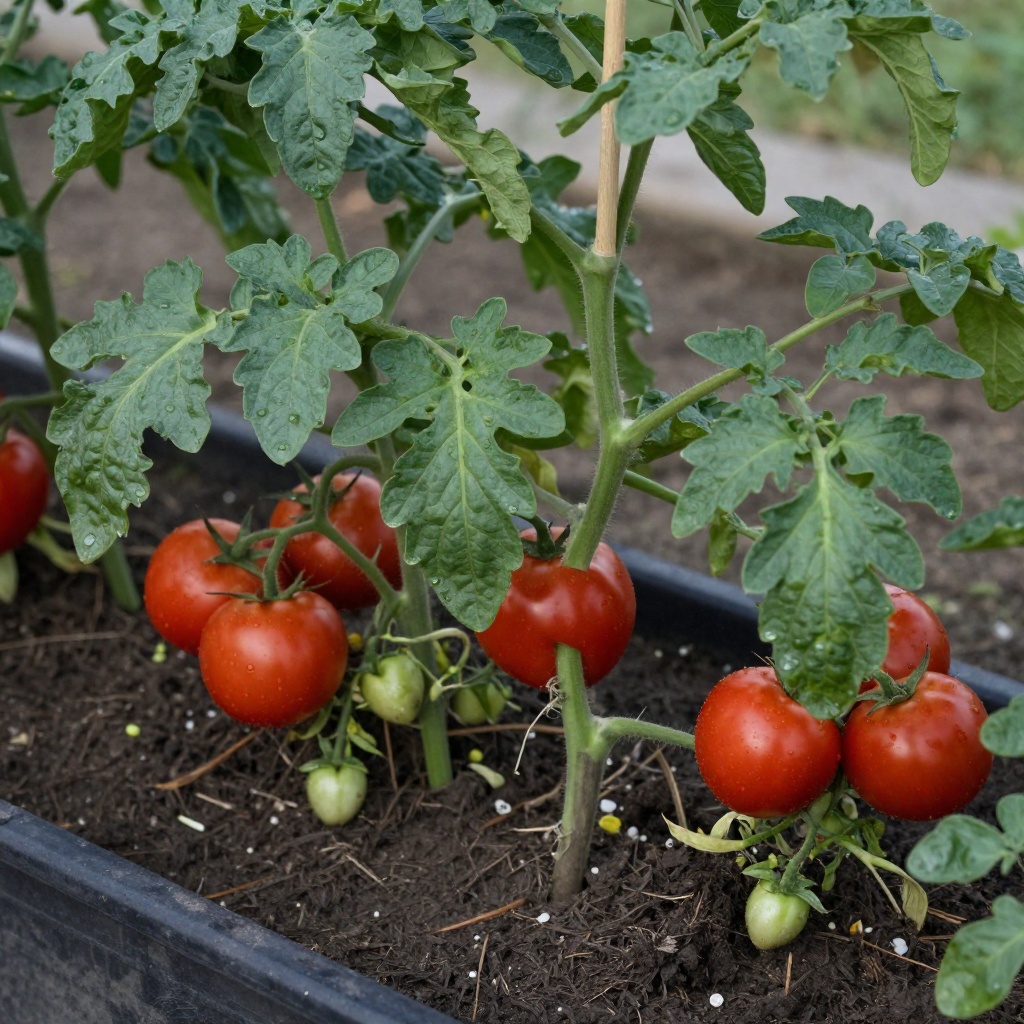
Support Mechanics: Tensioned twine holds heavy plants securely between vertical stakes.
System 2: The Florida Weave for Tomatoes
For indeterminate tomatoes, we strongly recommend the "Florida Weave" method. It's cheap, effective, and allows excellent access. Construction Steps:
- Drive End Stakes: At each end of your tomato row, drive a stout, 2m tall stake (metal T-post or thick wood) 50cm deep.
- Drive Line Stakes: Drive a sturdy stake between every second tomato plant (or every plant for heavy varieties).
- Weave the First Level: When plants are ~30cm tall, tie twine to an end stake. Weave it along one side of the first plant, around the next stake, back along the other side of the plant, and so on, creating a figure-eight. Pull taut and tie off at the far end stake.
- Add Levels: As plants grow 20-30cm, add a new level of twine above the previous one. Continue until the plants reach full height.
4. Synergy: Trellising and Targeted Irrigation
A technical challenge of vertical gardening is the increased transpiration rate; leaves exposed to more wind and sun lose water faster. A plant on a trellis can have double the water demand of a ground-sprawling plant. To counter this without constant overhead watering (which promotes disease), we integrate our trellis systems with targeted root hydration.
We integrate our trellises with deep root bottle irrigation. By placing the irrigation reservoir directly at the base of the trellis pole or main plant stem, we ensure the water is delivered deeply to the roots that are doing the hardest work of supporting massive vertical growth. This ensures that the plant maintains the turgor pressure (water pressure in its cells) required to keep its heavy fruit suspended and its leaves rigid. This combination of vertical support and sub-surface watering is the ultimate engineering solution for the Highveld gardener—it supports the plant from the root up.
Biological Reinforcement with Minerals:
Physical support isn't enough; we must also strengthen the plant from within. We use the minerals from agricultural wood ash to strengthen the cellular structure of our climbing stems. High calcium levels improve cell wall strength (like adding rebar to concrete), making the vines tougher and less likely to snap under the weight of a heavy harvest or during the high winds of a summer storm. A light dusting of wood ash around the base of plants, watered in, provides this crucial mineral. By supporting the plant both physically (with timber and twine) and biologically (with minerals and deep water), we create a resilient system that thrives in the face of environmental pressure. At the Evergreen Hideout, we build for the future, ensuring that every trellis is a stepping stone toward a more abundant, manageable, and self-sufficient life.
5. Summary and Your Next Move
Low-cost trellis systems are the skeletal system of a productive organic garden. They are the framework upon which abundance is built. By moving your crops into the vertical plane, you improve airflow, reduce pest and disease pressure, multiply your yield per square meter, and make gardening physically easier. It is a technical discipline that requires careful assembly and an understanding of the weight loads involved, but the rewards in yield, quality, and ease of management are immense. At the Evergreen Hideout, we don't just plant seeds; we engineer three-dimensional environments where those seeds can reach their full, towering potential. With a few poles and some twine, you can transform your garden from a flat plane into a vertical forest of food.
Trellis Selection Guide:
- Beans & Peas: A-Frame, Teepee, or simple netting attached to a wall/fence.
- Cucumbers & Light Squash: A-Frame or vertical netting.
- Indeterminate Tomatoes: Florida Weave or tall, sturdy single stakes.
- Heavy Winter Squash & Pumpkins: Extra-sturdy A-Frame or horizontal trellis (like a strong pergola) with slings made from old t-shirts to support individual fruits.
- Gourds & Melons: Same as heavy squash; ensure the trellis can hold 5-10kg per fruit.
Is your garden ready to grow up? I want to know if you have built your own trellises before or if you are planning to try the Florida Weave for your tomatoes this season. Have you found a great low-cost material in Soshanguve (like specific bamboo or a source for old pipes) that works well for plant supports, or are you looking for more advice on how to secure your A-frames against the summer wind? Share your trellis-building stories, failures, and construction questions in the comments below. What crop are you most excited to grow vertically? Let us work together to make the Evergreen Hideout the most productive and ingeniously built vertical garden in the community!