Garden Police: Attracting Beneficial Predators to the Hideout
A technical manual for ecological engineering and habitat creation to foster a self-regulating pest control system.
1. Introduction: The Biological Security Force
In the Evergreen Hideout, we do not aim for a sterile garden free of all insects; instead, we strive for a balanced ecosystem where pest populations are kept in check by a dedicated force of beneficial predators. This "Garden Police" force—consisting of ladybugs, lacewings, hoverflies, and parasitic wasps—works 24 hours a day to protect our crops. However, these biological allies will only stay where they have reliable food, water, and shelter. If your garden is a monoculture of only vegetables, these predators will simply fly over in search of a more diverse habitat. To secure their services, we must move beyond simple planting and begin the technical work of ecological engineering, transforming the Hideout into a high-value recruitment center for nature's most effective hunters.
Think of your garden as an economy. Pests are the "currency" that attracts predators. If you eliminate all pests (the currency), the predators (the workforce) have no reason to stay. Your goal is not pest eradication, but a stable, low-level pest economy that sustains a permanent predator population. This is the core of a resilient system: you are investing in a permanent, self-replicating security asset, not paying for a one-time extermination service.
- The Investment: The space and resources you dedicate to insectary plants and habitat.
- The Return: A reduction in crop loss, less labor spent on pest control, and increased pollination rates.
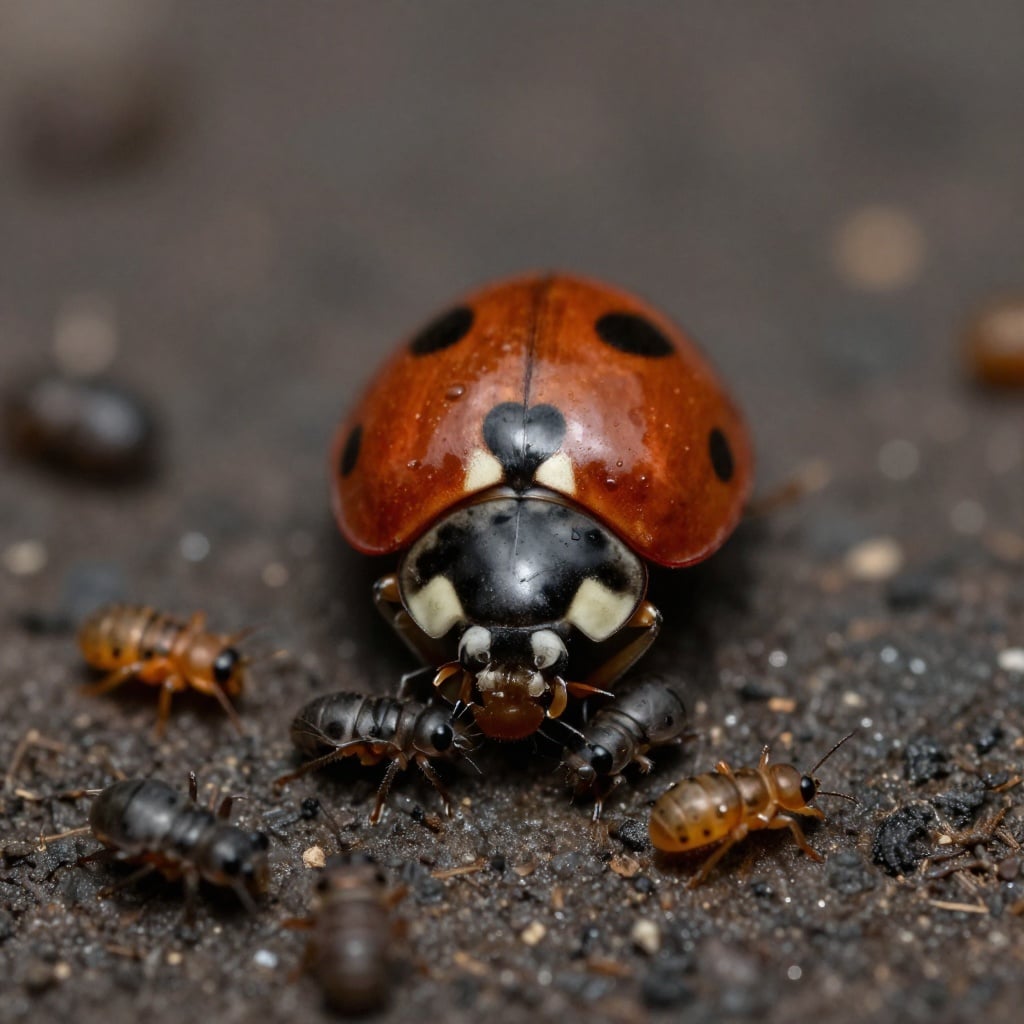
Biological Control: The larval stages of beneficial insects are often more voracious than adults.
Establishing this biological security force is the ultimate proactive step in the organic pest master manual. By providing the right environment, you reduce your reliance on manual interventions like scouting and spraying. This stability is particularly important when protecting sensitive crops like those grown using trench method. When your soil is pumping high levels of nutrients into your plants, they become "beacons" for pests; having a resident population of predators ensures that any infestation is neutralized before it can reach a threshold that causes economic damage to your harvest.
The trench method creates vigorous, fast-growing plants. This rapid growth can outpace minor pest damage, but it also produces tender, nutrient-rich sap that is highly attractive to aphids and mites. Your Garden Police are the essential counterbalance to this inherent attractant. They patrol these high-value plants continuously, ensuring the pest attraction does not become an infestation. This is a perfect example of designing a system where one pillar's strength (deep fertility from Soil Biology) is supported by another (biological control from Pest Management).
2. Why This Topic Matters: The Pest-Predator Lag
The primary reason most organic gardens fail to control pests is the "Pest-Predator Lag." In a typical garden, aphids arrive first, and it takes several days for predators to discover them and begin breeding. During this lag, pests can cause significant damage. By engineering "Insectary Strips"—dedicated areas of flowering plants—you ensure predators are already living in your garden before pests arrive. This technical approach shifts the garden from a "reactive" state to a "preventative" state.
The lag period is not random; it's a function of distance and habitat. A predator may be 100 meters away in a wild patch. To collapse this lag to zero, you must make your garden the most attractive real estate on the block.
- Establish a Breeding Population: Insectary plants provide nectar for adults, encouraging them to stay and lay eggs directly in your garden. Their larvae then hatch on-site, ready to hunt.
- Strategic Placement: Never plant your insectary strip in a corner. Integrate flowering plants within and around your vegetable beds. This places predators directly in the "crime scene."
- Succession Planting for Continuous Bloom: Stagger plantings of insectary plants so something is always in flower from early spring to late autumn. A gap in nectar equals a gap in your police force.
Furthermore, many of our best predators, like hoverflies and lacewings, are "dual-purpose" insects. As adults, they feed on nectar and pollen, but their larvae are ruthless carnivores that consume hundreds of soft-bodied pests. If you don't provide nectar sources, adults will never lay their eggs near your cabbages or beans. By integrating these flowering resources, you also support the pollinators required for high-calorie yields described in our guide on maize and corn production. This synergy ensures that every square meter of the Hideout is contributing to multiple biological functions at once.
Know your key officers and what they need:
- Hoverflies (Syrphidae): Adults look like small bees but hover in place. A single larva can eat up to 400 aphids. They are attracted to simple, open flowers like alyssum, calendula, and buckwheat.
- Lacewings (Chrysopidae): Delicate, green insects with large, transparent wings. Their larvae are called "aphid lions" for good reason. Adults need nectar and pollen from dill, coriander, and sunflowers.
- Parasitoid Wasps (Braconidae, Ichneumonidae): Tiny, non-stinging wasps that lay eggs inside pests (see our dedicated guide). They require very shallow nectar sources, like flowers from the Apiaceae family (dill, fennel, Queen Anne's lace).
- Ladybugs (Coccinellidae): Both adults and larvae consume vast numbers of aphids. They overwinter in leaf litter and dense vegetation, making fall clean-up a strategic decision.
3. The Technical Protocol for Habitat Creation
To attract a diverse police force, you must provide "The Big Three": Nectar, Shelter, and Water. For nectar, we plant "umbrella-shaped" flowers like dill, fennel, and yarrow. These flowers have shallow nectaries that are easily accessible to the tiny mouths of parasitic wasps. For shelter, we rely on "Soil Armor" techniques found in our guide on using maize stalks and grass mulch. This mulch layer provides a humid, protected environment for ground beetles and spiders, which are primary predators of soil-borne pests like cutworms. Without this cover, these nocturnal hunters would be exposed to the scorching Soshanguve sun and would quickly perish or leave.
Different predators occupy different vertical strata of your garden. You must provide shelter at each level.
- Soil Level (Ground Beetles, Spiders): A permanent, undisturbed mulch layer 5-10cm deep. Leave some areas with fallen leaves or a flat stone. This is their daytime refuge and hunting ground.
- Herbaceous Level (Ladybugs, Lacewing Larvae): Dense, low-growing plants like thyme, oregano, or even a patch of nettles provide hiding places from birds and harsh weather.
- Canopy Level (Adult Hoverflies, Wasps): Taller, flowering plants provide perching and resting spots. A few strategically placed, rough-barked sticks or bamboo canes offer overnight roosting.
- Overwintering Sites: Do not "tidy up" all garden debris in autumn. Leave a section of spent plants, a pile of logs, or a dedicated "bug hotel" to provide crucial winter shelter for hibernating adults and pupae.

Structural Diversity: Providing nooks and crannies ensures that beneficial insects have a place to overwinter.
Water is the most overlooked technical requirement. Small insects can easily drown in a standard birdbath or bucket. We create "Insect Hydration Stations" by filling a shallow saucer with pebbles and water. The pebbles provide a dry landing pad and prevent drowning while allowing the bees and wasps to land on the stones to drink safely. This simple technical modification can significantly increase the residency time of beneficial insects in your garden. When predators don't have to leave the Hideout to find water, they spend more time patrolling your vegetables, leading to a much higher "kill rate" for invading pests.
On the Highveld, water is a precious resource for all life. Your hydration stations can be optimized.
- The Pebble Tray (Standard): As described. Place in dappled shade to reduce evaporation and algae growth.
- The Moss Bath (Premium): Line a shallow dish with sphagnum moss and keep it moist. The moss holds water like a sponge, providing a large, safe drinking surface and increasing local humidity—a bonus for delicate parasitoid wasps.
- Strategic Placement: Locate stations within 3-5 meters of your key insectary plants and vegetable beds. This creates a "resource hub" where predators can fuel up without straying far from their patrol zone.
- Maintenance: Refresh water every 2-3 days to prevent mosquito breeding. Rinse pebbles monthly to prevent slime buildup.
4. Managing the Force: The No-Spray Rule
The most important technical rule for managing your Garden Police is the absolute avoidance of broad-spectrum insecticides, even those labeled as "organic" like Pyrethrum. These chemicals do not distinguish between a pest and a predator. If you spray your aphids, you also kill the ladybugs that were about to eat them, ensuring that the next generation of aphids will have no opposition. Instead, we use targeted biological interventions that respect the biology of the garden, such as high-pressure water sprays that physically dislodge aphids without leaving a toxic residue.
There will be times when pest populations spike. Your response must be surgical to protect your Police force.
- Assess the Threat: Is the pest causing actual damage to fruit or terminal buds? Or is it just on older leaves? If it's the latter, wait and let the predators arrive.
- Use Physical Removal First: A strong jet of water from a hose can knock aphids off plants. They rarely find their way back. Hand-pick larger pests like caterpillars.
- Apply Targeted, Police-Safe Sprays: If you must spray, use materials that break down quickly and have minimal impact on adults. Insecticidal soap (potassium salts of fatty acids) affects soft-bodied pests on contact but leaves no lasting residue harmful to predators. Apply at dusk when many adult predators are less active.
- Never Spray the Entire Garden: Spot-treat only the most affected plants. Leave "refuge" areas with some pests to maintain the predator food base.
We also practice "Pest Tolerance." If you see a small colony of aphids on a non-essential plant, leave them alone. They act as a "nursery" for your predators, ensuring there is enough food to keep the ladybugs and hoverflies from leaving your garden. This technical patience allows the ecosystem to reach a "carrying capacity" where the predator population is always slightly higher than the pest population. By fostering this balance, you turn the Hideout into a self-defending fortress, where the biology of the system does the hard work for you.
You can engineer your pest tolerance strategically by using trap crops.
- The Concept: Plant a crop that is more attractive to a specific pest than your main vegetables. The pests congregate there, making them easy to monitor and providing a concentrated food source for your Garden Police.
- Examples for Soshanguve:
- For aphids: Plant a few nasturtiums away from your brassicas. Aphids love them.
- For beetles: Plant a row of radishes or Chinese cabbage to attract flea beetles away from your main seedlings.
- Management: Monitor the trap crop closely. You can even manually remove pests from it if numbers get too high, but often, the predators will handle it, keeping them fed and focused in one area.
5. Summary and Your Next Move
Recruiting the Garden Police is an exercise in ecological humility and technical design. By providing nectar, shelter, and water these beneficial predators require, you transform the Evergreen Hideout from a simple vegetable patch into a vibrant, self-regulating ecosystem. It is a strategy that values the intelligence of nature over the brute force of chemistry, resulting in a cleaner, safer, and more productive garden for everyone. At the Hideout, we don't just grow food; we grow a community of life that works together to ensure our collective success.
Transforming your garden into a predator haven is a project for a single season. Follow this phased plan:
- Phase 1: Foundation (Month 1):
- Cease all broad-spectrum spraying immediately.
- Establish a permanent mulch layer in all beds.
- Build and place 2-3 insect hydration stations.
- Phase 2: Recruitment (Months 2-3):
- Sow quick-blooming insectary plants like alyssum, buckwheat, and dill in borders and between vegetable rows.
- Create one sheltered overwintering site (a log pile, leaf pile, or simple bug hotel).
- Introduce a "trap crop" like nasturtiums at the garden edge.
- Phase 3: Observation & Refinement (Months 4-6):
- Spend 10 minutes daily observing insect activity. Learn to identify the larvae of ladybugs, lacewings, and hoverflies.
- Note which flowers attract the most beneficials and plan to expand them next season.
- Practice the Selective Intervention Protocol at the first sign of a pest spike.
Is your Garden Police force already on duty? I want to know if you have started seeing ladybugs or hoverflies in your garden lately or if you are planning to plant your first "Insectary Strip" this season. Have you set up a hydration station for your bees and wasps, or are you looking for more advice on identifying which bugs are the "good guys"? Share your predator-attraction stories and your insect questions in the comments below. Let us work together to make the Evergreen Hideout the most well-policed garden in Soshanguve!